
Generating high-quality leads is one of the most important activities for any growing business. Whether you run a SaaS company, marketing agency, consulting business, freelancing service, or B2B company, you need a consistent way to find potential customers.
However, finding the right prospects manually can take a lot of time. Sales professionals may need to search company websites, professional networks, business directories, and other sources before they can even start a conversation.
This is where lead generation tools can help.
Modern lead generation software can help businesses discover potential customers, identify decision-makers, find business contact information, build targeted prospect lists, automate outreach, and manage leads.
In 2026, many B2B lead generation platforms combine prospect databases with automation, AI-assisted research, lead scoring, intent signals, CRM integrations, and sales engagement features. Apollo, for example, currently offers contact search, advanced filters, lead scoring, intent signals, website visitor tracking, and sales outreach features in its platform.
In this guide, we’ll explore some of the best lead generation tools in 2026, what they do, and which type of lead-generation workflow they can support.
What Is a Lead Generation Tool?
A lead generation tool is software designed to help businesses identify and attract potential customers.
Depending on the platform, a lead generation tool may help you:
- Find potential customers
- Discover companies and decision-makers
- Search business contact information
- Build targeted prospect lists
- Enrich lead information
- Identify buying signals
- Automate sales outreach
- Manage leads
- Track campaign performance
- Connect lead data with a CRM
For B2B businesses, these tools can be particularly useful because sales teams often need to identify specific companies and people who match their ideal customer profile.
Why Are Lead Generation Tools Important?
Without a structured lead-generation process, businesses can spend a significant amount of time searching for potential customers.
Lead generation software can simplify several parts of this process.
1. Save Time
Instead of manually researching hundreds of companies, sales teams can use search filters to create targeted prospect lists.
2. Find More Relevant Prospects
Many platforms allow users to filter prospects according to criteria such as:
- Job title
- Industry
- Location
- Company size
- Seniority
- Revenue
- Technology
- Company type
This makes it easier to focus on prospects that match your ideal customer profile.
3. Organize Prospect Information
A lead-generation platform can bring different pieces of prospect information into one workflow.
4. Automate Repetitive Tasks
Some platforms provide automated email sequences, follow-ups, lead scoring, and workflow automation.
5. Connect With CRM Systems
Many lead-generation tools integrate with CRM platforms so that prospect information can move between systems instead of being entered manually.
10 Best Lead Generation Tools in 2026
1. Apollo.io
Best for: B2B prospecting, contact discovery, and sales outreach
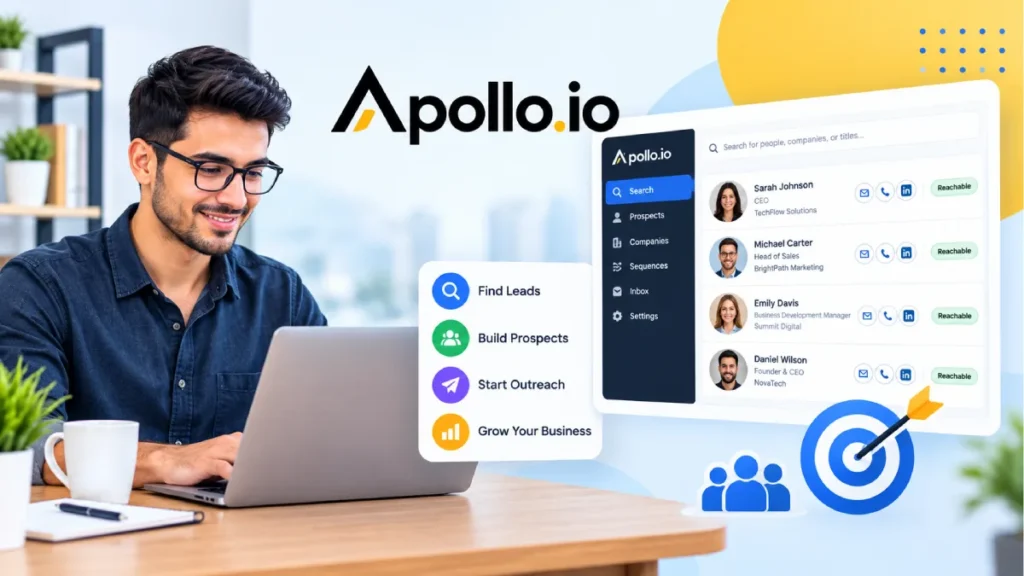
Apollo.io is an all-in-one B2B sales and lead-generation platform.
Its current platform includes a B2B contact database, advanced search filters, lead scoring, intent signals, website visitor tracking, and sales engagement features. Apollo says its database contains more than 240 million contacts and 30 million companies, with more than 65 filters for prospecting.
Users can search for prospects based on factors such as job title, industry, location, company size, and other attributes.
Key Features
- B2B contact database
- Contact and company search
- Advanced filters
- Lead scoring
- Buying-intent signals
- Website visitor tracking
- Email sequences
- Sales engagement
- CRM integrations
- Chrome extension
Another useful feature is the ability to create multi-step outreach sequences involving email, calls, and LinkedIn tasks.
For businesses that want prospect research and sales engagement in one platform, Apollo can provide a centralized workflow.

2. LinkedIn Sales Navigator
Best for: LinkedIn-based B2B prospecting
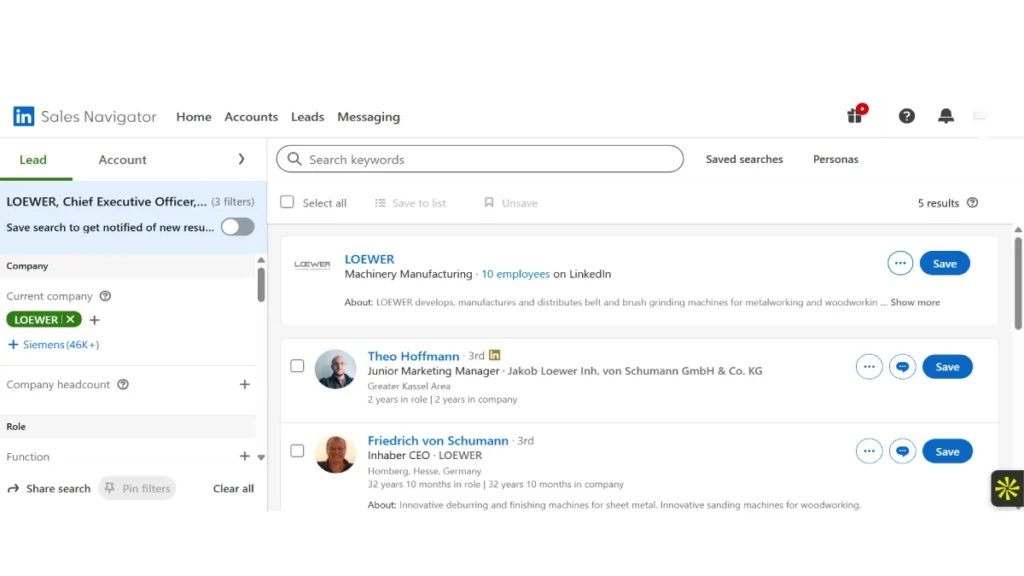
LinkedIn Sales Navigator is a sales prospecting platform built around LinkedIn’s professional network.
It can help sales professionals discover potential customers using professional and company-related information.
Typical prospecting criteria can include:
- Job title
- Company
- Industry
- Geography
- Seniority
- Company size
One advantage of using a professional-network-based prospecting platform is that users can research a prospect’s professional background before starting a conversation.
Sales Navigator can therefore be useful for businesses that use LinkedIn as an important part of their B2B sales strategy.
3. HubSpot
Best for: CRM-based lead management and inbound marketing
HubSpot is more than a lead-generation tool. It provides a broader collection of CRM, marketing, sales, customer-service, and automation features.
For lead generation, businesses can use HubSpot to capture and organize leads through websites, forms, landing pages, marketing campaigns, and sales activities.
Key Features
- CRM
- Lead management
- Forms
- Landing pages
- Email marketing
- Sales automation
- Lead tracking
- Analytics
- Marketing automation
HubSpot can be useful when a business wants to manage leads after they enter the sales funnel instead of only finding new prospects.
4. ZoomInfo
Best for: B2B sales intelligence
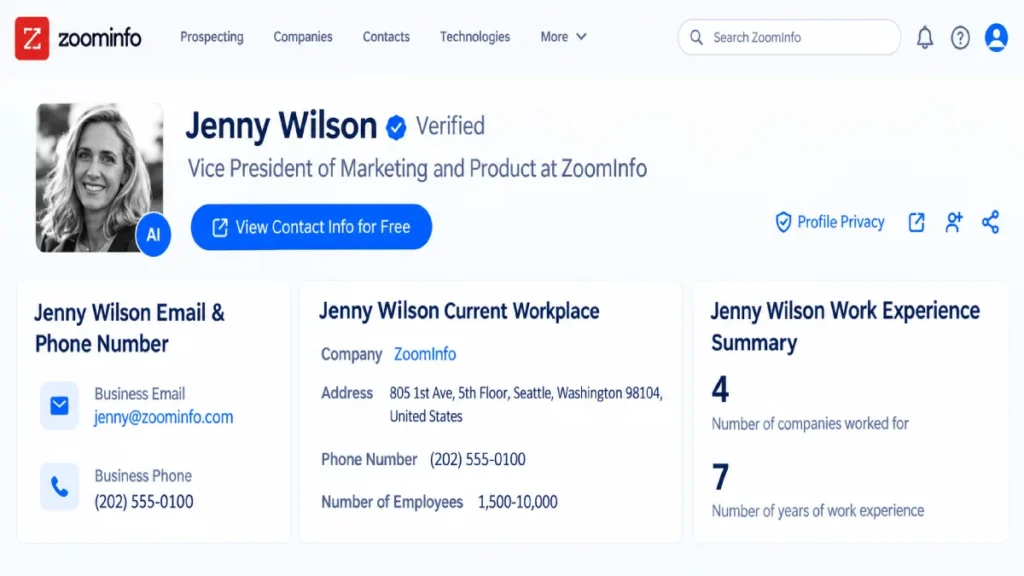
ZoomInfo is a sales-intelligence platform designed to provide businesses with information about companies and professionals.
Sales teams can use sales-intelligence platforms to research target accounts, discover potential decision-makers, and support prospecting activities.
ZoomInfo is generally positioned toward businesses that need extensive B2B intelligence and account-level information.
Key Features
- Company information
- Contact information
- Sales intelligence
- Intent information
- Account research
- CRM integrations
- Prospecting
Businesses should evaluate data coverage, accuracy, compliance requirements, and pricing before selecting a sales-intelligence platform.
5. 6sense
Best for: Account-based marketing and buying intent
6sense focuses on account-based marketing and buyer-intent signals.
Instead of focusing only on individual contacts, an ABM platform can help businesses understand which target companies may be researching relevant products or services.
This approach can be useful for B2B organizations with longer sales cycles and multiple decision-makers.
Key Features
- Account intelligence
- Intent data
- Account-based marketing
- Buyer signals
- Account prioritization
- Sales and marketing alignment
The main concept behind intent-based lead generation is to use available signals to prioritize accounts rather than treating every potential prospect equally.
6. Demandbase
Best for: Account-based marketing
Demandbase is another platform focused on B2B account intelligence and account-based marketing.
ABM strategies focus on target companies rather than relying exclusively on individual lead lists.
Businesses can use account-based platforms for activities such as:
- Account targeting
- Account research
- Buyer-group analysis
- Advertising
- Sales and marketing alignment
This type of platform may be particularly relevant to organizations selling high-value products or services to other businesses.
7. Lusha
Best for: Contact discovery and prospect research
Lusha is a B2B prospecting and contact-data platform.
Businesses can use contact-data platforms to research potential customers and obtain available business contact information.
Common use cases include:
- Prospect research
- Contact discovery
- Lead enrichment
- B2B sales
- Company research
For smaller sales teams, a focused contact-discovery tool can sometimes be easier to incorporate into an existing workflow than a large enterprise sales-intelligence platform.
8. Cognism
Best for: B2B sales intelligence and prospecting
Cognism provides B2B sales-intelligence and prospecting capabilities.
The platform can help sales teams research companies and contacts and enrich prospect information.
For businesses operating internationally, it is important to consider factors such as geographic coverage, data quality, and applicable privacy and marketing requirements when selecting a contact-data provider.
Common Use Cases
- Prospecting
- Contact research
- Data enrichment
- Sales intelligence
- CRM workflows
9. Semrush
Best for: SEO-based inbound lead generation
Not every lead has to come from cold outreach.
Businesses can also generate leads through search engines by creating useful content that attracts people who are actively searching for information.
Semrush provides tools for areas such as:
- Keyword research
- Competitor analysis
- SEO audits
- Content research
- Backlink analysis
- Organic-search research
For example, a marketing agency could research keywords related to digital marketing services, publish useful articles, attract organic traffic, and then convert interested visitors through a contact form or consultation page.
This makes SEO software useful for inbound lead generation.
10. Ahrefs
Best for: SEO and content-driven lead generation
Ahrefs is another popular SEO platform that can support content-led lead generation.
Businesses can use SEO research to discover what their potential customers are searching for and then create content around those topics.
A basic SEO lead-generation funnel could look like:
Keyword Research → Helpful Content → Organic Traffic → Landing Page → Lead
Ahrefs can be useful for researching keywords, competitors, backlinks, and content opportunities.
This strategy is different from cold outbound prospecting because the potential customer discovers the business through search rather than receiving an unsolicited sales message.
Lead Generation Tools Comparison
| Tool | Primary Purpose | Typical Use |
| Apollo.io | Prospecting and sales engagement | B2B outbound |
| LinkedIn Sales Navigator | Professional prospecting | LinkedIn sales |
| HubSpot | CRM and marketing | Lead management |
| ZoomInfo | Sales intelligence | Account research |
| 6sense | Intent and ABM | Account-based marketing |
| Demandbase | ABM and account intelligence | Enterprise marketing |
| Lusha | Contact discovery | Prospect research |
| Cognism | Sales intelligence | B2B prospecting |
| Semrush | SEO | Inbound leads |
| Ahrefs | SEO and content research | Organic lead generation |
The table shows why there is no single tool that performs exactly the same job as every other platform. Some focus on contact data, some on CRM and marketing, some on account intelligence, and others on organic search.
How to Choose the Right Lead Generation Tool
Before choosing a platform, consider your actual lead-generation process.
1. Define Your Ideal Customer
Start by identifying who you want to reach.
Consider:
- Industry
- Company size
- Location
- Job role
- Seniority
- Business needs
This information will help you determine what type of tool you actually need.
2. Choose Your Lead Generation Method
There are two broad approaches:
Outbound Lead Generation
You identify potential customers and proactively contact them.
Examples include:
- Email outreach
- Professional-network prospecting
- Sales calls
Inbound Lead Generation
Potential customers discover your business through content, search engines, social media, or other channels.
Examples include:
- SEO
- Blog content
- Lead magnets
- Website forms
Your strategy should influence which type of software you choose.
3. Check Integrations
If you already use a CRM, check whether the lead-generation platform integrates with it.
Moving data between systems efficiently can reduce repetitive work.
4. Consider Data Quality
A large database does not automatically mean every record will be suitable for your business.
Consider:
- Data freshness
- Verification
- Geographic coverage
- Contact accuracy
- Compliance requirements
5. Consider Your Budget
Small businesses may not need an enterprise-level sales-intelligence platform.
Start with the features you actually need and expand your software stack as your sales process becomes more complex.
How to Use Lead Generation Tools Effectively
A lead-generation tool works best when it is connected to a clear process.
Step 1: Define Your ICP
Create an Ideal Customer Profile describing the companies and people you want to reach.
Step 2: Build a Prospect List
Use appropriate filters to find companies and contacts matching your criteria.
Step 3: Research Prospects
Review relevant company and professional information before contacting someone.
Step 4: Verify Information
Where possible, verify business contact information before using it.
Step 5: Personalize Your Outreach
Avoid sending exactly the same generic message to every prospect.
Make your message relevant to the prospect’s business or role.
Step 6: Follow Up
Create a consistent follow-up process while respecting applicable communication and privacy rules.
Step 7: Measure Results
Track metrics such as:
- Leads generated
- Qualified leads
- Reply rate
- Meetings
- Conversion rate
- Cost per lead
Step 8: Improve Your Process
Use your results to identify which audiences, channels, and content generate the most relevant opportunities.
Common Lead Generation Mistakes
Even sophisticated lead-generation software cannot replace a good strategy.
Targeting Too Many People
Trying to reach everyone can make your campaigns less relevant.
Define a clear target audience.
Focusing Only on Lead Quantity
A list containing thousands of contacts is not necessarily useful if most prospects are irrelevant.
Focus on lead relevance and qualification.
Ignoring Data Quality
Outdated or inaccurate information can waste time and reduce the effectiveness of your outreach.
Sending Generic Messages
Personalized and relevant communication is generally more useful than sending the same message to every prospect.
Using Too Many Tools
Adding multiple platforms can create unnecessary complexity.
Start with the tool that solves your biggest problem.

Pingback: B2B Lead Generation? How Can I Learn Lead Generation
Pingback: Learn how to use Apollo.io for B2B lead generation
Pingback: How to Verify Business Emails. Accurate B2B email