

B2B lead generation is an important skill in sales, digital marketing, business development, and freelancing. Businesses need a steady flow of potential customers, but finding the right companies and decision-makers can take considerable time and research.
In simple terms, B2B lead generation is the process of finding businesses and professionals who may be interested in a company’s products or services, researching those prospects, and organizing relevant information for potential sales opportunities.
For example, imagine that you provide website design services. Instead of waiting for customers to find you, you can research businesses that may need a new website, identify the appropriate decision-maker, and organize relevant business information. This is a basic example of B2B lead generation.
The good news is that beginners can learn lead generation without advanced programming skills. With internet research, spreadsheet skills, attention to detail, and regular practice, you can gradually build a useful lead generation skill set.
What Does B2B Mean?
B2B stands for Business-to-Business. It describes a business relationship in which one company sells products or services to another company.
For example:
- A software company sells software to businesses.
- A web design agency builds websites for companies.
- A marketing agency provides marketing services to e-commerce businesses.
- An accounting firm provides accounting services to organizations.
- An IT company provides technology solutions to other businesses.
This is different from B2C (Business-to-Consumer), where a company sells directly to individual consumers.
B2B purchases can involve multiple decision-makers and may require more research before a buying decision is made. Therefore, identifying the right companies and relevant contacts is an important part of the B2B sales process.
What Is B2B Lead Generation?
B2B lead generation is the process of identifying potential business customers and collecting relevant information about them.
A B2B lead can be a company or professional who may have a legitimate business need for a particular product or service.
For example, suppose you provide digital marketing services. Your target customers might include:
- SaaS companies
- E-commerce businesses
- Marketing agencies
- Real estate companies
- Technology companies
- Small and medium-sized businesses
You could then define a target profile such as:
Country: United States
Industry: Software
Company Size: 10–200 employees
Target Contact: Founder, CEO, or Marketing Manager
You would then research companies that match these criteria and organize the relevant information into a lead list.
The purpose is not simply to collect thousands of contacts. The goal is to find relevant prospects that fit the target customer profile.

What Is a B2B Lead?
A B2B lead is a potential business customer who may be interested in a company’s product or service.
For example, imagine that a company provides SEO services. An e-commerce business that wants to improve its online visibility could potentially be a relevant prospect.
A lead record may contain information such as:
| Lead Information | Example |
| Company Name | ABC Solutions |
| Contact Name | John Smith |
| Job Title | Marketing Manager |
| Industry | Software |
| Location | New York |
| Website | Company Website |
| Business Email | Business Email |
| LinkedIn Profile | Professional Profile |
The exact fields you collect should depend on the client’s requirements and the legitimate purpose of the project.
A professional lead list should be relevant, organized, accurate, and useful rather than simply large.
How Does B2B Lead Generation Work?
B2B lead generation usually follows several important steps.
Step 1: Define Your Ideal Customer Profile
Before searching for leads, you need to know exactly what type of company you are looking for.
This is often called an Ideal Customer Profile (ICP).
An ICP can include:
- Industry
- Country
- Location
- Company size
- Business type
- Revenue range
- Technology used
- Job titles
- Potential business needs
For example:
Industry: SaaS
Location: United States
Company Size: 10–100 employees
Target Contact: Founder or CEO
Step 2: Find Target Companies
After defining your target audience, the next step is finding companies that match your criteria.
You can research companies using:
- Google Search
- Company websites
- Industry directories
- Business databases
- Professional networking platforms
For example, if the client wants US-based software companies, you should search specifically for companies that meet those requirements.
Avoid adding unrelated companies just to increase the number of leads.
Lead quality is generally more important than simply increasing the number of records.
Step 3: Identify the Right Decision-Maker
Finding the company is only part of the process. You also need to identify the person who is relevant to the product or service.
Depending on the business, the appropriate contact could be:
- CEO
- Founder
- Co-Founder
- Marketing Manager
- Sales Manager
- Operations Manager
- IT Manager
- HR Manager
For example, if you are generating leads for a digital marketing company, a Founder, CEO, Marketing Manager, or Head of Marketing may be relevant.
The correct decision-maker depends on the company’s structure and what you are offering.
Step 4: Collect Relevant Information
Once you identify a suitable company and contact, collect the information required by the project.
A basic lead list could look like this:
| Company | Contact | Job Title | Website | Industry | Location |
| Example A | John Smith | CEO | Website | Software | USA |
| Example B | Sarah Lee | Founder | Website | Marketing | USA |
You can manage this information using:
- Google Sheets
- Microsoft Excel
- CSV files
- CRM software
Only collect information that is relevant to the business purpose and requested by the client.
Step 5: Qualify the Leads
Not every contact you find is a qualified lead.
Lead qualification means checking whether a prospect matches the target criteria and is potentially relevant to the business.
For example, a qualified lead may:
- Operate in the correct industry
- Be located in the target market
- Match the desired company size
- Have a relevant job title
- Meet the client’s requirements
A company that does not match the criteria can be marked as Not Qualified or removed from the final list.
Qualification helps businesses focus their sales efforts on prospects that are more likely to fit their target market.
Step 6: Verify the Information
Data verification is an important part of professional lead generation.
Before delivering a lead list, carefully review the information.
Check:
- Company name
- Company website
- Contact name
- Job title
- Industry
- Location
- Other required fields
For example, if someone was previously listed as a Marketing Manager, check whether that information is still current before treating it as verified.
Accurate information makes a lead list more useful and reduces the chance of wasting time on outdated records.
Step 7: Clean and Organize the Data
After collecting and verifying the information, clean the lead list.
Common data-cleaning tasks include:
- Removing duplicate records
- Removing irrelevant companies
- Correcting formatting errors
- Checking missing fields
- Standardizing company names
- Organizing columns
- Reviewing questionable records
For example, if the same company appears twice, review the entries and remove the unnecessary duplicate.
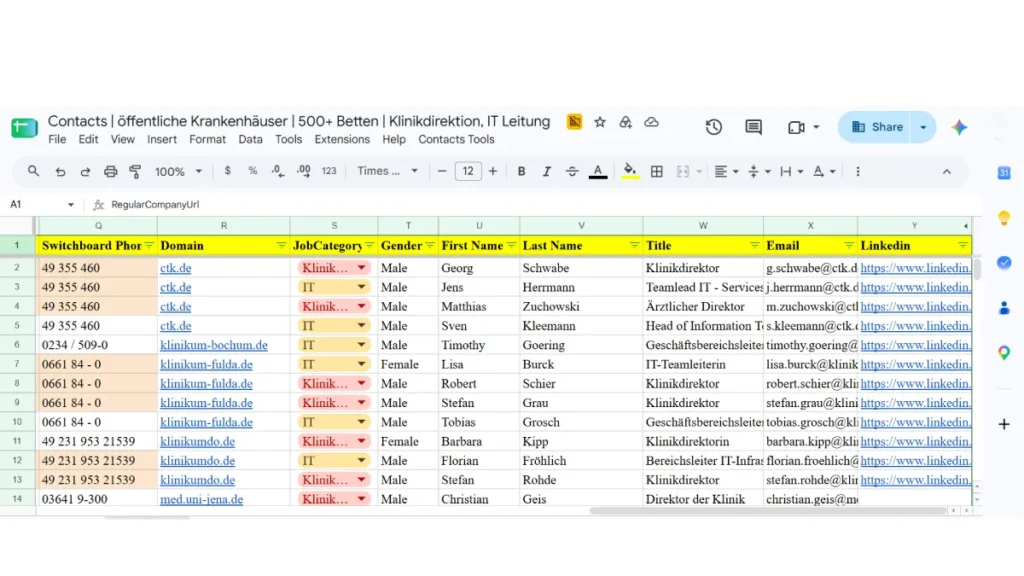
Step 8: Deliver the Final Lead List
After completing the research, qualification, verification, and cleaning process, prepare the final lead list for the client.
Common delivery formats include:
- Google Sheets
- Excel
- CSV
- CRM
Always follow the client’s requested format and required fields.
A professional lead list should be easy for the client to understand, review, and use.
How Can I Learn Lead Generation?
If you want to learn B2B lead generation, start with the basics instead of trying to learn every tool immediately.
Here is a practical learning path.
1. Learn B2B Fundamentals
First, understand the basic concepts:
- B2B
- B2C
- Lead
- Prospect
- Qualified lead
- Ideal Customer Profile
- Decision-maker
- Sales pipeline
Once you understand these terms, the practical side of lead generation becomes much easier.
2. Learn Internet Research
Internet research is one of the most important skills for a lead generation professional.
Practice finding:
- Company websites
- Company information
- Industries
- Locations
- Employees
- Job titles
- Business information
Start with small exercises.
For example:
Practice Task: Find 10 software companies in the United States.
Then record:
Company Name → Website → Industry → Location → Relevant Contact
As you practice, try to improve both your research speed and accuracy.
3. Learn Professional Networking Research
Professional networking platforms can be useful for researching companies and professionals.
Practice searching for prospects based on:
- Company
- Industry
- Job title
- Location
- Company size
The important skill is not simply finding people. You need to understand which people are relevant to the business objective.
When using professional platforms, always follow their current terms and applicable privacy and communication rules.
4. Learn Google Sheets or Excel
Spreadsheet skills are extremely useful for lead generation.
Learn how to:
- Create columns
- Sort data
- Filter records
- Remove duplicates
- Format information
- Find missing values
- Organize datasets
For example, create columns such as:
Company | Contact | Job Title | Website | Industry | Location | Status
5. Learn Lead Qualification
After learning basic research, learn how to determine whether a prospect is a good fit.
Start with a simple qualification system.
Qualified Lead
- Correct industry
- Correct location
- Correct company size
- Relevant job title
- Meets client requirements
Not Qualified
- Wrong industry
- Wrong location
- Wrong company size
- Irrelevant contact
- Duplicate record
As you gain experience, you can learn more advanced sales qualification methods.
6. Learn One B2B Prospecting Tool
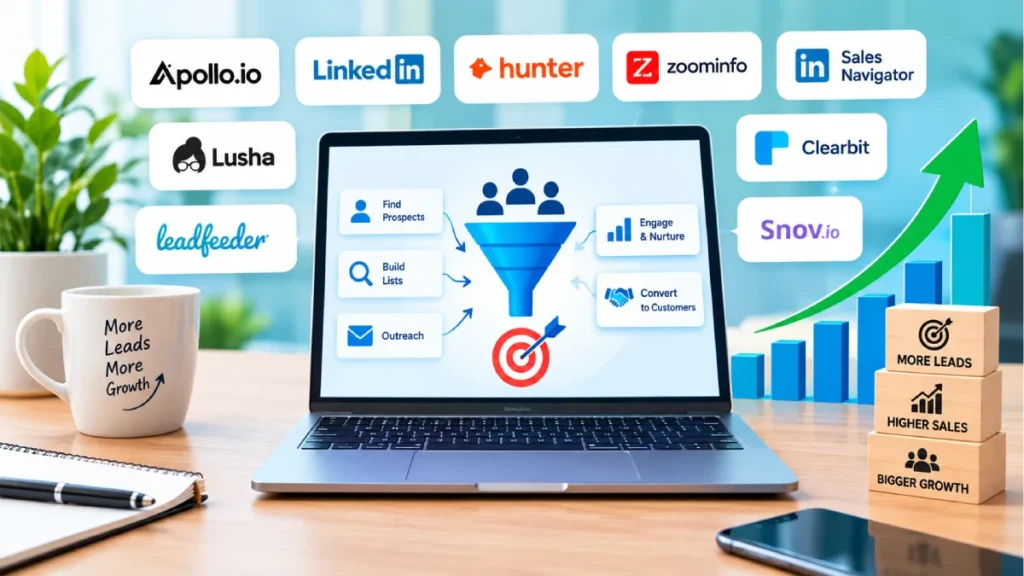
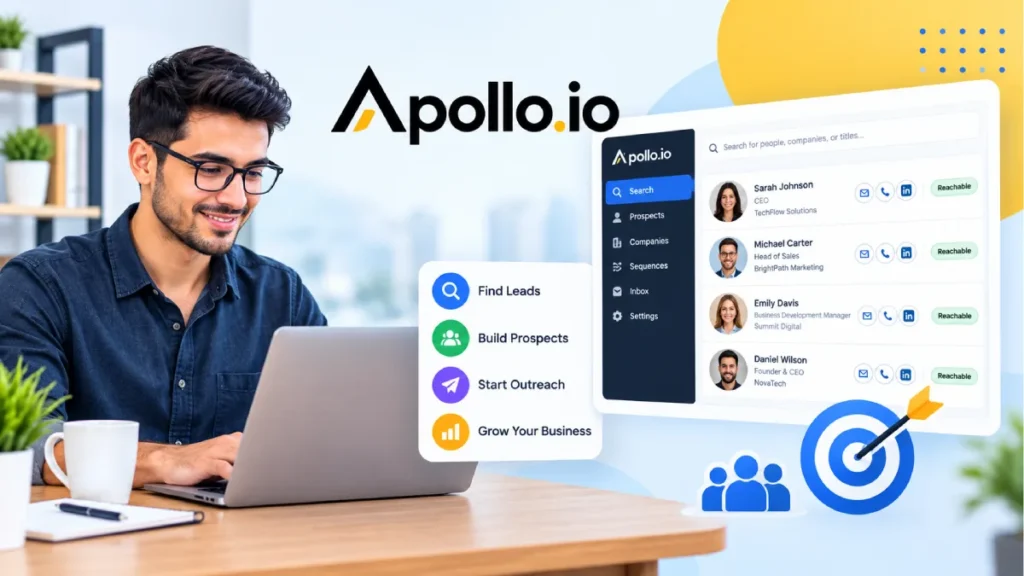
After learning manual research, choose one B2B prospecting tool and learn its basic functions.
Depending on the platform, you may be able to filter companies and contacts by:
- Industry
- Location
- Job title
- Company size
- Company name
- Other business criteria
Do not try to learn many tools at the same time.
First understand the lead generation process. Then learn additional tools when you need them.
7. Practice Data Verification
Create a small sample lead list and review every record.
Ask yourself:
- Is this the correct company?
- Is the website correct?
- Does the company match the target industry?
- Is the contact relevant?
- Is the job title appropriate?
- Is any required information missing?
This practice will help you develop attention to detail.
8. Build Practice Projects
The best way to learn lead generation is through practical projects.
Example Practice Project
Target Industry: Digital Marketing Agencies
Country: United States
Target Contact: Founder or CEO
Number of Leads: 20
Create a spreadsheet containing:
- Company Name
- Website
- Contact Name
- Job Title
- Industry
- Location
- Status
Research 20 sample companies, qualify them, organize the information, and review the final list.
You can later turn projects like this into portfolio samples.
A Simple 30-Day Lead Generation Learning Plan
Week 1: Learn the Fundamentals
Study:
- B2B
- Leads
- Prospects
- ICP
- Decision-makers
- Lead qualification
Practice basic company research.
Week 2: Research and Spreadsheet Skills
Practice:
- Google Search
- Company research
- Professional research
- Google Sheets or Excel
- Data cleaning
Week 3: Learn Prospecting Tools
Choose one B2B prospecting tool and practice:
- Company searches
- Job-title searches
- Industry filters
- Location filters
- Company-size filters
Week 4: Build Practice Projects
Create three sample projects:
Project 1: 20 software companies
Project 2: 20 marketing agencies
Project 3: 20 e-commerce businesses
For each project, define the target audience, research companies, identify relevant contacts, qualify the prospects, verify the information, and organize the data.
Common B2B Lead Generation Mistakes
Focusing Only on Quantity
A list of 1,000 irrelevant contacts is not necessarily better than a list of 100 relevant prospects.
Ignoring Client Requirements
Always understand the target industry, country, company size, job titles, and required data fields before starting.
Using Unverified Information
Outdated or incorrect information can reduce the quality of your lead list.
Creating Duplicate Records
Duplicate records make a database harder to manage and can waste the client’s time.
Learning Too Many Tools
Do not spend all your time learning tools. First learn research, qualification, verification, and data organization.
Ignoring Lead Quality
Good B2B lead generation is about finding relevant and useful prospects, not simply collecting as many contacts as possible.
B2B Lead Generation as a Freelancing Skill
B2B lead generation can also be developed as a freelancing skill.
Freelancers may offer services such as:
- B2B Lead Generation
- Lead List Building
- Company Research
- Internet Research
- LinkedIn Lead Research
- Data Entry
- Data Cleaning
- Prospect Research
However, successful lead generation requires more than knowing how to use a software tool.
You also need:
- Research skills
- Spreadsheet skills
- Attention to detail
- Data verification skills
- Good communication
- Understanding of client requirements
If you consistently deliver accurate, relevant, and well-organized work, you can gradually build a strong portfolio.
What Should I Learn First?
If you are starting from zero, follow this order:
1. B2B Fundamentals
↓
2. Internet Research
↓
3. Professional Research
↓
4. Google Sheets/Excel
↓
5. Lead Qualification
↓
6. Data Verification
↓
7. One Prospecting Tool
↓
8. Practice Projects
↓
9. Portfolio Building
↓
10. Client Projects
This learning path allows you to develop the skill gradually without becoming overwhelmed.
Final Thoughts
B2B lead generation is the process of finding potential business customers, researching suitable companies, identifying relevant decision-makers, qualifying prospects, verifying information, and organizing the data for the next stage of the sales process.
The basic workflow is:
Define → Research → Find → Qualify → Verify → Organize → Deliver
If you want to learn lead generation, start with the fundamentals and practice with small projects. Learn how to research companies, identify relevant decision-makers, organize information in spreadsheets, qualify prospects, and maintain data quality.
You do not need to master every tool immediately. Strong research skills, accurate data, attention to detail, and consistent practice are the foundation of successful B2B lead generation.
With regular practice, you can develop B2B lead generation into a valuable skill for sales, digital marketing, business development, or freelancing.
Pingback: Best Lead Generation Tools in 2026: Top B2B Tools
Pingback: Fiverr Lead Generation Guide: How to Get More Clients
Pingback: Best Email Verification Tools: Top Tools to Verify Email .
Pingback: Chrome Extensions for Lead Generation
Pingback: LinkedIn Outreach Tips 15 Proven Strategies to Get Better