In today’s competitive business environment, having a great product or service is not enough to guarantee success. Businesses also need to reach the right audience, build trust, and communicate their value effectively. This is where digital marketing becomes essential. Digital marketing allows businesses to connect with potential customers through search engines, social media platforms, email, websites, and other online channels.
Whether a company is a small startup, a local business, or an established organization, digital marketing provides opportunities to increase brand awareness, attract qualified leads, generate sales, and build long-term customer relationships. Unlike many traditional marketing methods, digital marketing also allows businesses to measure campaign performance and adjust their strategies based on real data.
Understanding how digital marketing helps businesses grow can help business owners make smarter marketing decisions and develop sustainable growth strategies. In this guide, we will explore the major benefits of digital marketing, the most effective strategies, and practical ways to measure success.
1. What Is Digital Marketing?
Digital marketing refers to promoting products, services, and brands through digital channels. These channels include search engines, websites, social media, email, online advertisements, and content platforms.
The main purpose of digital marketing is to connect businesses with their target audience at the right time and through the right communication channels.
Common types of digital marketing include:
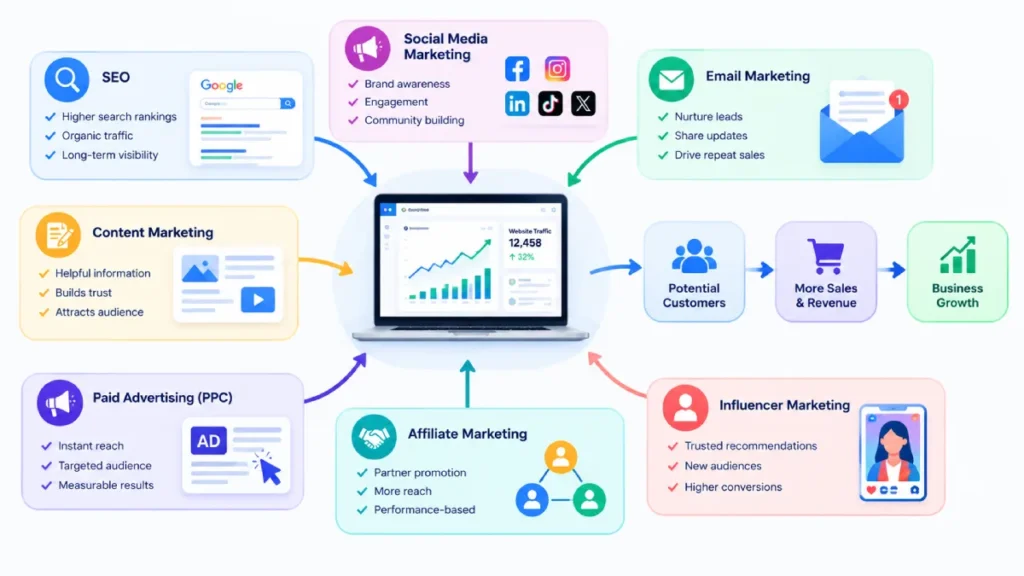
- Search Engine Optimization (SEO): Improving website visibility in organic search results.
- Content Marketing: Publishing useful articles, videos, guides, and other valuable content.
- Social Media Marketing: Promoting a business through platforms such as Facebook, Instagram, LinkedIn, and TikTok.
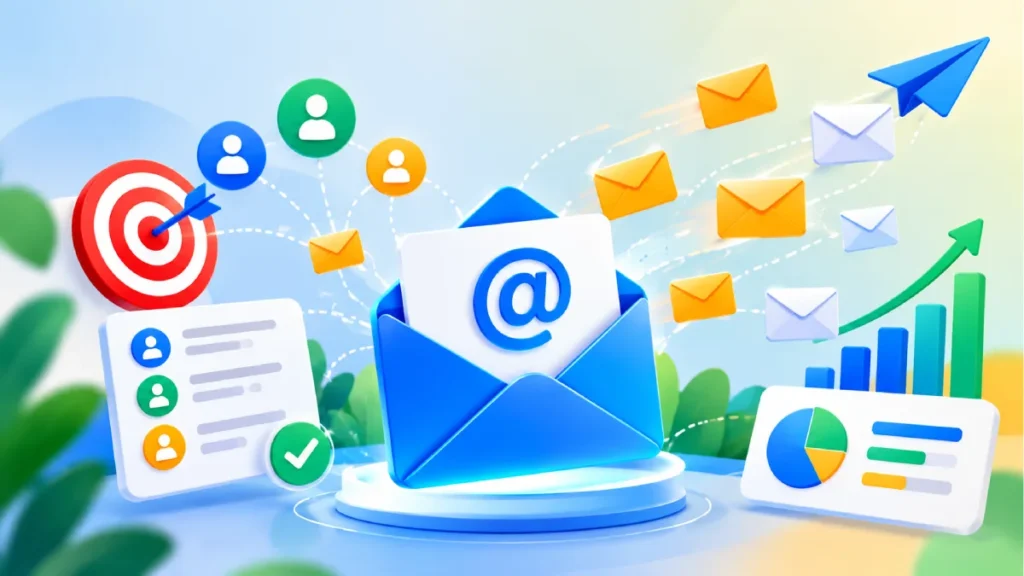
- Email Marketing: Sending relevant messages, updates, offers, and newsletters to subscribers.
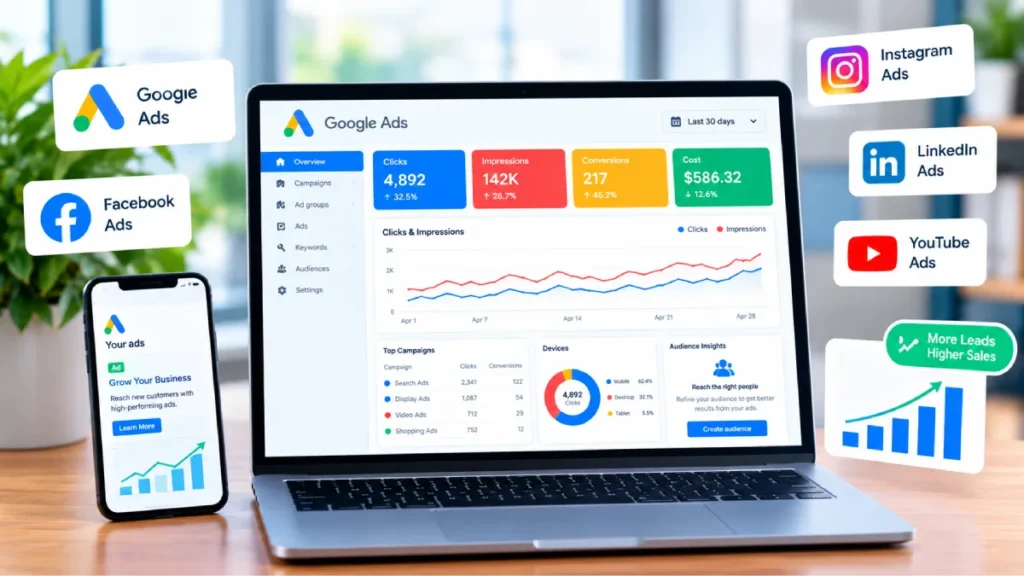
- Pay-Per-Click Advertising (PPC): Running paid advertisements and paying when users click on them.
- Affiliate Marketing: Working with partners who promote products or services in exchange for commissions.
- Influencer Marketing: Collaborating with creators who have an established audience.
Businesses can combine these methods to create a digital marketing strategy that supports their specific goals and budget.
2. Increases Brand Awareness
Brand awareness is one of the first steps toward business growth. Customers are more likely to consider a business when they recognize its name, understand its offerings, and become familiar with its reputation.
Digital marketing helps businesses introduce their brands to larger audiences through search engines, social media, online videos, blogs, and advertising campaigns.
For example, a new clothing brand can publish styling tips on Instagram, create helpful fashion articles, and use search engine optimization to attract people searching for clothing recommendations. Over time, these activities can help the brand reach more potential customers.
Consistent branding is important. Businesses should use recognizable visual elements, clear messaging, and a consistent tone across their digital channels.
Brand awareness does not always lead to immediate sales. However, repeated exposure to useful and relevant content can help customers remember a business when they are ready to purchase.
3. Reaches the Right Target Audience
One of the biggest advantages of digital marketing is its ability to reach specific audiences. Instead of promoting products to everyone, businesses can focus on people who are more likely to need their offerings.
Audience targeting can consider factors such as location, interests, online behavior, search intent, and previous interactions with a business. The targeting options available depend on the platform and applicable privacy rules.
For instance, a local fitness center can promote its services to people in nearby areas, while an online software company can create content for professionals searching for business automation tools.
Businesses should begin by developing buyer personas that describe their ideal customers. These profiles can include customer needs, challenges, purchasing motivations, and preferred communication channels.
Understanding the target audience helps businesses create more relevant campaigns, reduce wasted advertising expenditure, and improve the likelihood of attracting qualified leads.
4. Improves Website Traffic Through SEO
Search engine optimization is an important part of digital marketing because it helps businesses attract people who are actively searching for information, products, or services.
A well-optimized website can appear in relevant search results and attract organic traffic without paying for every click.
Effective SEO involves several activities, including keyword research, creating helpful content, optimizing page titles and headings, improving website navigation, and ensuring that pages can be crawled and indexed by search engines.
Technical performance also matters. Businesses should provide mobile-friendly pages, secure connections, accessible content, and a good page experience.
For example, a digital marketing agency could publish articles about SEO services, keyword research, and lead generation. When these pages answer users’ questions effectively, they may attract relevant visitors through search engines.
SEO usually requires time and consistent effort. Rankings are not guaranteed, but a useful website with relevant content can become a valuable long-term source of traffic and potential customers.

5. Generates More Qualified Leads
Lead generation involves attracting people who may be interested in a business’s products or services and encouraging them to take a meaningful next step.
Digital marketing supports lead generation through landing pages, downloadable resources, newsletter subscriptions, contact forms, webinars, and consultation offers.
For example, a web development company can publish a free website checklist. Visitors who find the checklist useful may voluntarily provide their email addresses to receive it. The company can then send relevant educational emails and explain how its services solve common website problems.
The quality of leads is just as important as the quantity. Businesses should focus on attracting people whose needs align with their offerings.
To improve lead generation, companies should create clear calls to action, simplify forms, explain the benefits of their offers, and ensure that landing pages match the expectations created by their advertisements or search results.
Tracking conversion rates helps identify which campaigns attract the most valuable prospects.
6. Increases Sales and Revenue
The ultimate goal of many digital marketing activities is to increase profitable sales. Digital channels help businesses introduce products, explain benefits, address customer concerns, and guide potential buyers toward purchasing decisions.
Search engine marketing can capture demand from people actively looking for a solution. Social media content can introduce products to new audiences, while email campaigns can remind interested customers about relevant offers.
E-commerce businesses can also use product demonstrations, customer reviews, comparison pages, and abandoned-cart reminders to support purchasing decisions.
For example, an online store selling skincare products might publish educational content about product ingredients, provide clear product descriptions, and send personalized recommendations based on customers’ preferences and consent.
However, more sales do not automatically mean greater profit. Businesses should consider product costs, advertising expenses, returns, and customer acquisition costs when evaluating campaign performance.
A sustainable digital marketing strategy focuses on profitable growth rather than simply increasing website visits or sales volume.
7. Builds Stronger Customer Relationships
Business growth depends not only on acquiring new customers but also on maintaining relationships with existing ones. Digital marketing gives companies several ways to communicate with customers after a purchase.
Email newsletters, helpful blog posts, product tutorials, social media communities, and customer support channels can keep customers informed and engaged.
For example, a software company might send onboarding emails to new users, share tutorials explaining useful features, and provide updates when new tools become available. These communications can help customers get more value from the product.
Personalization can also improve the customer experience when it is relevant, transparent, and based on appropriate data practices.
Businesses should listen to customer feedback, respond professionally to questions, and resolve problems promptly. Trust develops when companies consistently deliver on their promises.
Satisfied customers may return for future purchases, recommend the business to others, and leave genuine reviews that help new customers make informed decisions.
8. Provides Cost-Effective Marketing Opportunities
Traditional advertising methods, such as television, radio, and print, can require substantial budgets. Digital marketing offers a wider range of options, including strategies that businesses can begin with relatively limited resources.
Small businesses can publish useful content, maintain social media profiles, optimize their websites, and build email lists without investing heavily in paid advertising.
Paid campaigns can also be adjusted according to available budgets. Businesses may test different audiences, advertisements, and landing pages before allocating more money to successful campaigns.
Nevertheless, digital marketing is not automatically inexpensive. Advertising competition, professional services, software subscriptions, content production, and campaign management can all create costs.
The best approach is to set clear objectives, estimate expected returns, test campaigns carefully, and invest in channels that demonstrate meaningful business results.
Cost-effectiveness should be evaluated through outcomes such as qualified leads, customer acquisition cost, conversion rate, and profit—not simply the lowest advertising price.
9. Strengthens Social Media Engagement
Social media marketing helps businesses communicate directly with their audiences, share updates, showcase products, and participate in relevant conversations.
Platforms such as Facebook, Instagram, LinkedIn, and TikTok offer different opportunities depending on a business’s audience and objectives.
A business-to-business company, for example, might use LinkedIn to share industry insights and case studies. A fashion retailer might use Instagram to publish product photography, styling videos, and customer-generated content.
Consistency is important, but publishing frequently is not enough. Businesses should focus on content that answers questions, demonstrates expertise, solves problems, or entertains their intended audience.
Engagement can be measured through meaningful interactions such as comments, shares, saves, clicks, and inquiries. These metrics provide more useful insights when connected to broader marketing objectives.
Social media can strengthen brand recognition and customer relationships, although businesses should avoid relying on a single platform for all their customer acquisition activities.
10. Helps Businesses Make Data-Driven Decisions
One of the most valuable benefits of digital marketing is the ability to measure performance and learn from results.
Analytics tools can show how visitors reach a website, which pages they view, how long they engage with content, and which actions they complete. Advertising platforms also provide campaign-level performance information.
Businesses can use these insights to identify successful marketing channels, discover weak points in the customer journey, and improve their campaigns.
For example, if a website receives substantial traffic but generates few inquiries, the business could investigate its page content, offer, form design, loading speed, or call to action.
A simple measurement process includes four steps:
- Set a specific marketing goal.
- Choose metrics that reflect that goal.
- Review performance regularly.
- Test improvements and compare the results.
Not every metric is equally important. A large number of social media impressions may look impressive, but qualified leads and profitable sales are often more meaningful indicators of business growth.
Businesses should also respect privacy requirements and use appropriate consent and data-handling practices when collecting or analyzing customer information.
11. Creates a Competitive Advantage
Digital marketing helps businesses compete by making their expertise, products, and customer experience easier to discover online.
A small company can publish detailed educational resources, demonstrate its services, and build a recognizable online presence even when competing with larger organizations.
Competitive research can reveal the topics customers care about, the questions competitors answer, and opportunities to provide clearer or more useful information.
However, copying competitors rarely creates a lasting advantage. Businesses should identify what makes their offerings different, such as specialized expertise, better support, convenient service, unique products, or a stronger understanding of customer needs.
A consistent online presence supported by useful content and reliable customer service can help a business earn trust and distinguish itself within its market.
12. Supports Long-Term and Sustainable Growth
Digital marketing is most effective when individual activities work together as part of a long-term strategy.
SEO can attract ongoing organic traffic, content marketing can educate potential customers, email marketing can nurture relationships, and paid advertising can help reach specific audiences or test new offers.
Together, these channels can create a more consistent customer journey—from discovering a brand to considering its products, making a purchase, and returning for future business.
Businesses should review their strategy regularly as customer behavior, market conditions, technology, and platform policies change.
A sustainable approach also requires realistic expectations. Search rankings take time to develop, advertising performance can fluctuate, and customer relationships require ongoing attention.
Rather than chasing every new trend, businesses should prioritize the channels that align with their objectives, serve their customers well, and deliver measurable results.
13. How to Build an Effective Digital Marketing Strategy
Businesses can start developing a practical digital marketing strategy by following these steps:
Step 1: Define clear business goals. Decide whether the priority is increasing brand awareness, generating leads, improving online sales, or retaining customers.
Step 2: Understand the target audience. Research customer needs, purchasing behavior, common questions, and preferred online platforms.
Step 3: Build a strong online presence. Create a professional, mobile-friendly website with clear service information, useful content, and accessible contact options.
Step 4: Choose the right marketing channels. Start with channels that match customer behavior and business resources. A local service provider may prioritize local SEO, while a business-to-business company may focus on LinkedIn and email marketing.
Step 5: Create valuable content. Publish articles, videos, case studies, and social media posts that answer genuine customer questions and demonstrate expertise.
Step 6: Measure performance. Track relevant metrics such as qualified leads, conversion rates, customer acquisition cost, and return on advertising spend.
Step 7: Improve continuously. Review results, test new approaches, and invest more resources in strategies that support profitable growth.
A focused strategy with clear goals is generally more useful than trying to use every digital marketing channel at once.

14. Measuring the Success of Digital Marketing
Measuring results helps businesses understand whether their marketing investment is producing meaningful outcomes. The most appropriate metrics depend on the campaign’s objective.
Important digital marketing KPIs include:
- Website traffic: The number of visits or visitors attracted to a website.
- Conversion rate: The percentage of relevant visitors who complete a desired action.
- Cost per lead: The marketing expenditure required to generate a lead.
- Customer acquisition cost (CAC): The cost of acquiring a new customer.
- Return on ad spend (ROAS): The revenue attributed to advertising divided by advertising expenditure.
- Customer retention rate: The proportion of customers who continue their relationship with a business over a defined period.
- Email engagement: Metrics such as clicks, unsubscribes, and conversions from email campaigns.
For example, a business investing in paid advertising should examine whether the revenue and profit generated justify the campaign costs. A business focusing on SEO may instead monitor organic traffic, relevant search visibility, and conversions from organic visitors.
Results should be evaluated over an appropriate period and compared with relevant baselines. Businesses should also consider attribution limitations, because customers may interact with several channels before making a purchase.

Conclusion
Digital marketing helps businesses grow by increasing brand awareness, attracting relevant audiences, improving website traffic, generating qualified leads, and supporting sales. It also allows businesses to strengthen customer relationships, compete more effectively, and make informed decisions through performance data.
The most successful approach is not necessarily the one that uses the most channels or spends the largest budget. It is the one that understands customer needs, delivers genuine value, measures results, and improves consistently.
Businesses can begin with a professional website, helpful content, a focused SEO strategy, and one or two relevant marketing channels. As they gain experience and collect reliable performance data, they can expand their efforts strategically.
Ultimately, digital marketing is more than an online promotional activity. When planned and managed effectively, it becomes a long-term business growth system that helps companies reach customers, build trust, and create sustainable opportunities.
Frequently Asked Questions (FAQ)
1. How does digital marketing help businesses grow?
Digital marketing helps businesses increase brand awareness, reach target audiences, attract website visitors, generate leads, improve sales, and build lasting customer relationships.
2. Which digital marketing strategy is best for small businesses?
The best strategy depends on the business model and target audience. SEO, local search optimization, content marketing, social media marketing, and email marketing can be useful starting points for small businesses.
3. Is digital marketing expensive?
Digital marketing can accommodate different budgets. Organic strategies may require more time and expertise, while paid advertising requires a financial investment. Businesses should choose channels based on their goals and expected returns.
4. How long does digital marketing take to show results?
The timeline varies by channel and competition. Paid advertising may generate traffic quickly, while SEO and content marketing often require several months of consistent work to demonstrate meaningful results.
5. How can businesses measure digital marketing success?
Businesses can track website traffic, conversion rates, qualified leads, customer acquisition cost, sales revenue, retention, and advertising returns to evaluate performance.
6. Can digital marketing help a new business?
Yes. Digital marketing can help new businesses introduce their brands, reach potential customers, explain their offerings, and develop an online presence without depending entirely on traditional advertising.
7. Why is SEO important for business growth?
SEO helps businesses become more visible in relevant search results. It can attract people who are already looking for information, products, or services related to their needs.
8. What is the first step in digital marketing?
The first step is defining clear business objectives and understanding the target audience. These decisions help determine which channels, content, and performance metrics are most appropriate.