
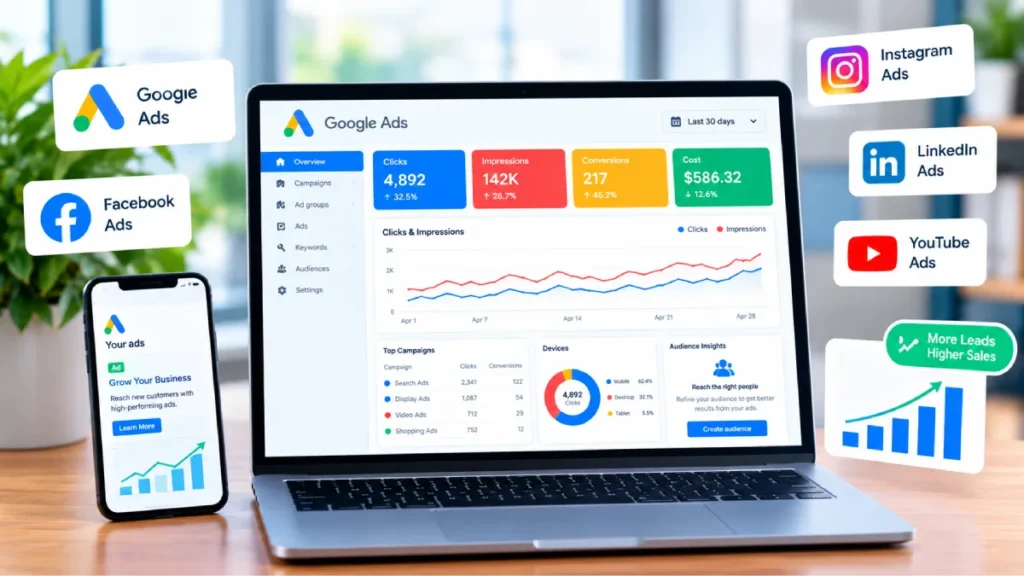
Digital marketing has become one of the most effective ways for small businesses to reach customers, build brand awareness, and increase sales. Whether you run a local shop, an online store, a consulting service, or a startup, a strong digital marketing strategy can help you compete in today’s crowded marketplace. Unlike traditional advertising, digital marketing allows businesses to connect with specific audiences, measure campaign performance, and adjust their marketing activities based on real results.
However, successful digital marketing does not require a huge budget or a large marketing team. Small businesses can achieve meaningful results by focusing on the right channels, understanding customer needs, and consistently delivering useful content. From search engine optimization and social media marketing to email campaigns and paid advertising, several practical strategies can help businesses grow online.
This guide explores the most effective digital marketing strategies for small businesses, explains how to implement them, and shares practical tips for building a sustainable online presence.
1. Build a Professional, User-Friendly Website
A website is the foundation of most digital marketing strategies. It gives potential customers a central place to learn about your business, explore products or services, and contact your team. Social media profiles are useful, but a business website provides greater control over your content, branding, and customer experience.
Your website should communicate what your business offers, who it serves, and why customers should choose it. Include clear navigation, useful service descriptions, contact information, customer testimonials when available, and visible calls to action.
Mobile responsiveness is especially important because many users browse and shop through smartphones. Pages should load quickly, text should be readable, and buttons should be easy to use on smaller screens. A confusing or slow website can cause visitors to leave before discovering your products or services.
Use analytics tools to understand how visitors interact with your website. Monitor important metrics such as traffic sources, popular pages, engagement, and completed inquiries or purchases. These insights can help you improve your website over time.

2. Use Search Engine Optimization to Attract Organic Traffic
Search engine optimization (SEO) helps your website appear in relevant search results. When potential customers search for products, services, or solutions related to your business, effective SEO can improve your chances of being discovered.
Start with keyword research. Identify the words and phrases your target audience uses when searching online. For example, a bakery might target phrases such as “custom birthday cakes near me,” while a marketing consultant might focus on “digital marketing services for startups.”
Choose keywords that match your audience’s needs and the purpose of each page. Avoid forcing keywords into every sentence. Instead, use them naturally in page titles, headings, introductions, meta descriptions, image alt text, and relevant body content.
Create useful, original content that answers common customer questions. Blog posts, service pages, tutorials, and frequently asked questions can help establish your expertise while addressing specific search intent.
Technical SEO also matters. Ensure that search engines can access your pages, use descriptive URLs, fix broken links, and maintain a logical site structure. Google Search Console can help you monitor search visibility, indexing issues, and the queries that bring visitors to your website.
SEO takes time, so focus on consistent improvements rather than expecting immediate results. Track relevant rankings, organic clicks, and conversions to understand whether your efforts are contributing to business growth.
3. Strengthen Your Local SEO Strategy
Local SEO is especially valuable for businesses that serve customers in specific geographic areas. Restaurants, repair services, salons, clinics, and local retailers can use local search optimization to improve their visibility when nearby customers look for relevant services.
Start by creating or improving your Google Business Profile. Provide accurate business information, including your business name, address or service area, phone number, opening hours, website, and appropriate categories. Add genuine photos that help customers understand your location, products, or services.
Keep your information consistent across your website and relevant business directories. Inconsistent contact details can confuse potential customers and make it harder for them to find or contact you.
Customer reviews can also influence how people evaluate a business. Encourage satisfied customers to share honest feedback, and respond professionally to both positive and negative reviews. Never purchase fake reviews or offer misleading incentives.
Create useful local content where appropriate. For example, a home repair company could publish a guide to common maintenance problems in its service area. Include location names naturally when they genuinely relate to your services.
Review your local performance regularly. Monitor profile interactions, website visits, calls, direction requests, and inquiries. These measurements can reveal which local marketing activities are most useful.
4. Create Valuable Content Marketing Campaigns
Content marketing involves publishing helpful information that attracts and educates your target audience. Instead of relying exclusively on advertisements, small businesses can build trust by answering questions and solving problems related to their products or services.
Start by identifying the challenges your customers face. A fitness equipment store could publish product comparison guides, while an accounting service could explain basic invoicing practices for freelancers. The best topics are closely connected to customer needs and business expertise.
Choose formats that suit your audience and resources. Blog articles, short videos, infographics, tutorials, case studies, and downloadable guides can all support a content marketing strategy.
Develop a realistic publishing schedule. Publishing one useful article every week or two may be more sustainable than attempting to publish every day and abandoning the effort later.
Make each piece of content easy to read by using descriptive headings, short paragraphs, examples, and relevant links. Include a clear next step when appropriate, such as reading a related guide, subscribing to a newsletter, or contacting your business.
Repurpose content to reach different audiences. A detailed blog post can become several social media posts, a short video, an email newsletter, or a visual checklist. This approach helps small teams make better use of their time without simply duplicating identical content everywhere.
5. Use Social Media Marketing Strategically
Social media marketing helps small businesses communicate with customers, share useful information, and develop recognizable brands. However, maintaining a presence on every platform is not necessary.
Identify where your target audience spends time and select one or two suitable platforms. Instagram and TikTok may work well for visually engaging products, LinkedIn can support professional services and business-to-business marketing, and Facebook may help businesses connect with local communities.
Create a balanced content mix. Share educational tips, product demonstrations, behind-the-scenes updates, customer stories with permission, and relevant business announcements. Avoid turning every post into a sales pitch.
Consistency is more important than posting constantly. Build a manageable content calendar and schedule posts around your business priorities. Respond to comments and messages professionally, and participate in relevant conversations where you can provide genuine value.
Use platform analytics to understand which posts generate meaningful engagement, website visits, inquiries, and sales. Likes and follower counts can provide context, but they do not always indicate business success.
Social media should support your wider marketing strategy. Include links to relevant website pages, encourage newsletter subscriptions where appropriate, and make it easy for interested customers to take the next step.
6. Build an Email Marketing Strategy
Email marketing gives small businesses a direct way to communicate with people who have chosen to receive their updates. It can support customer relationships, product launches, educational campaigns, repeat purchases, and announcements.
Begin by building an email list through legitimate opt-in methods. Offer useful resources, exclusive updates, or relevant information in exchange for voluntary subscriptions. Explain what subscribers can expect and make it easy for them to unsubscribe.
Segment your audience when possible. New subscribers may need an introduction to your business, while existing customers may appreciate product recommendations, maintenance advice, or relevant follow-up offers.
Write clear subject lines that accurately describe the message. Keep emails focused, use readable formatting, and include one primary call to action. Ensure that your emails display properly on mobile devices.
Automation can save time. For example, you can send a welcome email after someone subscribes or a follow-up message after a customer requests information. Use automation responsibly and respect subscriber preferences.
Track delivery, clicks, conversions, and unsubscribes. Open rates can be affected by privacy features and email software, so do not rely on them alone. The most useful measurement is whether your campaigns encourage meaningful actions without overwhelming your audience.
7. Experiment With Paid Digital Advertising
Paid advertising can help small businesses reach potential customers more quickly than organic strategies alone. Search ads, social media ads, and remarketing campaigns each serve different purposes.
Search advertising may be useful when people are actively looking for a product or service. Social media advertising can help introduce your brand to audiences based on relevant targeting options. Remarketing can reconnect with eligible visitors who have previously interacted with your business, subject to applicable privacy requirements.
Begin with a clear objective, such as generating qualified leads, increasing purchases, or receiving booking inquiries. Define your target audience, choose appropriate campaign settings, and create advertisements that communicate a specific benefit.
Set a budget that your business can afford to test and manage. Start with a limited experiment rather than committing a large amount before understanding performance. Track the cost per lead or purchase, conversion rate, and return on advertising spend where reliable revenue data is available.
Review search terms, audience performance, and landing pages regularly. Pause poorly performing ads, test alternative messages, and invest more carefully in campaigns that demonstrate consistent results.
Paid advertising works best when it supports a clear offer and a useful landing page. Sending visitors to an irrelevant or confusing page can waste your budget, even if the advertisement receives many clicks.
8. Improve Conversion Rates and Customer Experience
Attracting website visitors is only one part of digital marketing. Businesses must also help those visitors complete meaningful actions, including making a purchase, requesting a quotation, booking an appointment, or subscribing to a newsletter.
Conversion rate optimization focuses on identifying and reducing obstacles in this process. Begin by checking whether your landing pages clearly explain the offer, provide relevant information, and make the next step obvious.
Use descriptive calls to action such as “Request a Quote,” “Book an Appointment,” or “View Products.” Keep forms as short as practical and request only information that is genuinely needed.
Build trust with transparent pricing where appropriate, clear contact information, genuine testimonials, straightforward policies, and accurate product descriptions. Avoid exaggerated claims or artificial urgency.
Review user behavior to identify potential problems. For example, many visitors may leave a page because the content does not match the advertisement that brought them there. Others may abandon a checkout process because it is confusing or requires unnecessary steps.
Test one meaningful change at a time whenever possible. Compare results over a sufficient period and account for differences in traffic and audience behavior before deciding whether a change has improved performance.

9. Measure Results With Digital Analytics
Analytics helps small businesses understand which marketing activities produce useful outcomes. Without measurement, it is difficult to distinguish effective campaigns from activities that consume time and money without delivering value.
Use tools such as Google Analytics and Google Search Console to understand website traffic, search performance, and user activity. Advertising platforms and email marketing services also provide campaign-specific reporting.
Select metrics that match your goals. For brand awareness, you might monitor reach and relevant website visits. For lead generation, track qualified inquiries and cost per lead. For online sales, measure purchases, conversion rate, average order value, and revenue attributable to campaigns when tracking is reliable.
Avoid focusing exclusively on vanity metrics. A post with thousands of views may generate little business value, while a smaller campaign may bring a few highly qualified customers.
Create a simple monthly report that includes your goals, spending, key results, and planned improvements. Compare performance with previous periods, while considering seasonal changes and differences in campaign conditions.
Use what you learn to refine your strategy. Digital marketing is an ongoing process of testing, measuring, and improving—not a one-time task.
10. Develop a Practical Digital Marketing Budget
Small businesses should prioritize marketing activities based on their goals, resources, and customer acquisition opportunities. A practical budget can include website maintenance, content creation, email software, paid advertising, and selected marketing tools.
You do not need to spend on every channel immediately. Businesses with limited resources can begin with a professional website, foundational SEO, local search optimization where relevant, and a consistent content plan.
As your business grows, invest in the channels that demonstrate meaningful results. Consider both direct costs and the time required to maintain each activity. Free tools can be useful, but their limitations should be understood before they become essential to your workflow.
Review your budget regularly and keep some flexibility for testing new ideas. Avoid increasing spending simply because competitors appear to be investing heavily in advertising. Your decisions should reflect your audience, business model, and actual performance.
11. Follow a Simple 90-Day Digital Marketing Plan
A structured plan makes it easier to turn digital marketing ideas into consistent action.
Days 1–30: Build the foundation. Review your website, identify your target audience, research relevant keywords, improve essential website pages, and update your business information. Set measurable goals and establish baseline performance metrics.
Days 31–60: Publish and promote. Create useful content, improve your social media presence, begin building an email list, and publish content that answers common customer questions. If appropriate, test a small paid advertising campaign with a clearly defined objective.
Days 61–90: Measure and optimize. Review traffic, leads, engagement, and sales. Identify the most promising channels, improve weak landing pages, test new content ideas, and adjust your budget based on evidence.
Your exact schedule will depend on your industry and resources. The purpose of the plan is to create a repeatable process that supports steady improvement rather than expecting instant results.
12. Common Digital Marketing Mistakes to Avoid
One common mistake is trying to use every marketing channel at once. Spreading limited resources across too many platforms can make it difficult to maintain quality or measure results. Focus on the channels that best match your customers and objectives.
Another mistake is publishing content without understanding search intent or customer needs. Content should answer real questions and provide useful information instead of repeating keywords without purpose.
Ignoring mobile users, failing to respond to customer inquiries, and neglecting website maintenance can also undermine marketing efforts. Similarly, spending money on advertisements without tracking conversions makes it difficult to determine whether campaigns are worthwhile.
Finally, avoid expecting immediate results from every strategy. SEO and relationship-based marketing often require consistent effort, while paid campaigns can produce faster visibility but still need testing and optimization.
Conclusion
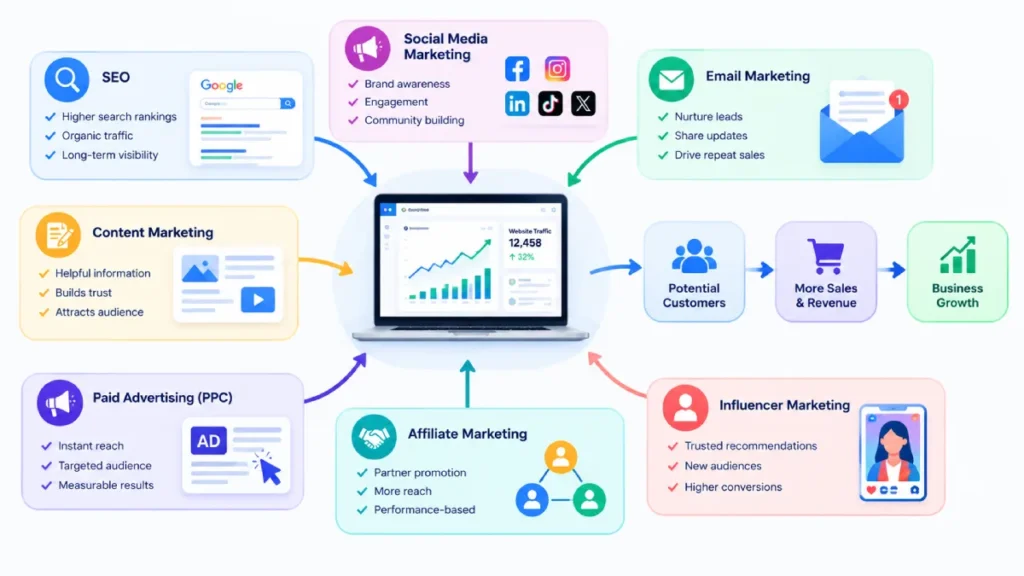
Digital marketing strategies for small businesses work best when they are practical, measurable, and centered on customer needs. A professional website, effective SEO, local visibility, valuable content, social media engagement, email marketing, and carefully managed advertising can help businesses attract relevant audiences and develop stronger customer relationships.
You do not need to implement every strategy at once. Start with the fundamentals, establish clear goals, and choose marketing channels that suit your audience and budget. Measure performance regularly, learn from the results, and improve your approach over time.
With consistent effort and a willingness to adapt, small businesses can build a sustainable online presence, reach more potential customers, and create opportunities for long-term growth.

Pingback: How Digital Marketing Helps Businesses Grow