
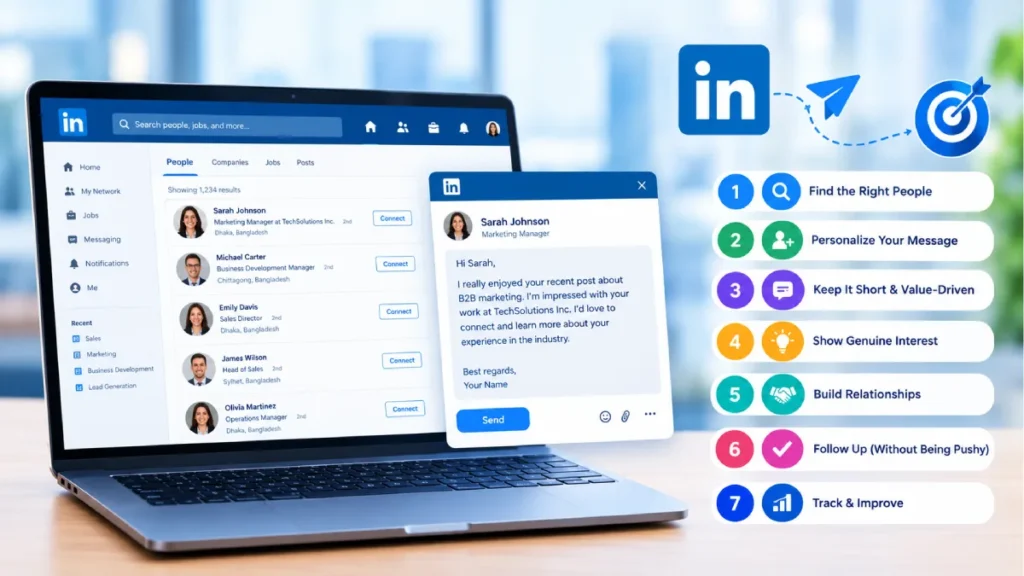
LinkedIn is one of the most useful platforms for B2B networking, lead generation, freelancing, recruiting, and professional relationship building. However, simply sending connection requests or copying the same sales message to hundreds of people rarely produces good results.
Successful LinkedIn outreach is about starting meaningful conversations with the right people. A personalized message, a clear purpose, and consistent follow-up can make your outreach more effective without making it feel like spam.
In this guide, we’ll explore practical LinkedIn outreach tips that can help freelancers, marketers, sales professionals, recruiters, and business owners improve their connection and response rates.
What Is LinkedIn Outreach?
LinkedIn outreach is the process of contacting professionals, potential clients, prospects, recruiters, or business partners through LinkedIn.
Outreach can include:
- Sending personalized connection requests
- Starting conversations through LinkedIn messages
- Following up with prospects
- Sharing useful resources
- Building professional relationships
- Introducing relevant services
- Connecting with potential business partners
The main objective should not always be to make an immediate sale. Building trust and creating a professional relationship can be more valuable in the long term.
Why LinkedIn Outreach Is Important
LinkedIn has a professional audience that makes it particularly useful for B2B networking and lead generation.
Instead of contacting random people, you can search for prospects based on factors such as:
- Job title
- Industry
- Company
- Location
- Skills
- Experience
- Company size
This makes LinkedIn useful for targeted outreach campaigns.
For example, a freelancer offering lead generation services could search for founders, sales managers, marketing managers, or business development professionals who may need help building prospect lists.

15 LinkedIn Outreach Tips That Work
1. Define Your Target Audience
Before sending messages, determine exactly who you want to contact.
A clear target audience makes your outreach more focused.
For example, instead of targeting “business owners,” you might target:
- SaaS founders
- Marketing agency owners
- B2B sales managers
- Startup founders
- Recruiting agencies
- E-commerce companies
Create an ideal customer profile before starting your campaign.
Consider factors such as industry, company size, location, job title, and potential business needs.
2. Optimize Your LinkedIn Profile
Your LinkedIn profile is one of the first things a prospect may check after receiving your message.
Make sure your profile clearly explains:
- Who you are
- What you do
- Who you help
- What skills you have
- What type of results you can provide
Use a professional profile photo and create a headline that communicates your expertise.
Your About section should also explain your services or professional experience in a clear and easy-to-understand way.
A strong profile can make your outreach feel more credible.
3. Research Prospects Before Contacting Them
One of the most important LinkedIn outreach tips is to research your prospects before sending a message.
Look at their:
- Current job
- Company
- Recent posts
- Professional interests
- Business activities
- Possible challenges
You don’t need to spend a huge amount of time researching every person. Even a few minutes of relevant research can help you create a more personalized message.
4. Send Personalized Connection Requests
Avoid sending exactly the same message to everyone.
Instead, personalize your connection request based on something relevant to the person.
For example:
“Hi John, I came across your recent post about B2B sales strategies. I found your insights interesting and would be happy to connect.”
This approach feels more natural than immediately sending a promotional pitch.
Keep your message short and professional.
5. Avoid Selling Immediately
One of the biggest outreach mistakes is trying to sell something immediately after connecting.
Imagine receiving a connection request and then instantly getting a long sales pitch.
It can feel like spam.
Instead, start a genuine professional conversation.
You could:
- Ask about a relevant topic
- Mention their recent post
- Share a useful resource
- Discuss a common industry topic
Build the relationship before making a sales proposal.
6. Write Short LinkedIn Messages
Long messages can be difficult to read, especially when the recipient is busy.
Try to keep your first message short.
A simple structure is:
Personalization + Reason for Contact + Conversation Starter
For example:
“Hi Sarah, I noticed that your company is expanding its sales team. I work with B2B companies on prospect research and lead generation. I’d be interested to hear how your team currently handles prospecting.”
This gives the recipient a reason to respond without creating pressure.
7. Focus on the Prospect’s Needs
Effective outreach is not just about explaining what you do.
It should also focus on what the prospect may need.
Instead of saying:
“I provide high-quality lead generation services.”
You could say:
“I help B2B sales teams build targeted prospect lists so they can spend less time researching leads.”
The second version explains the potential value more clearly.
Before contacting someone, think about the problem your service or product can solve.
8. Engage With Their Content
Another useful LinkedIn outreach strategy is engaging with a prospect’s content before sending a message.
You can:
- Like relevant posts
- Leave a thoughtful comment
- Share useful insights
- Follow their company
- Respond to discussions
However, your comments should be genuine.
Avoid comments such as:
“Great post!”
Instead, add something useful to the discussion.
For example:
“Great point about personalized outreach. Combining personalization with accurate prospect research can make B2B campaigns much more relevant.”
This can help you become familiar to the person before you start a direct conversation.
9. Use a Clear Call to Action
If you want the prospect to take a specific action, make the next step clear.
Your call to action could be:
- “Would you be interested in discussing this?”
- “Would you like me to send you an example?”
- “Would a quick conversation be useful?”
- “Can I share a few ideas?”
Avoid making the call to action complicated.
The easier it is to understand, the easier it is for the prospect to respond.
10. Follow Up Without Spamming
Not receiving a reply doesn’t necessarily mean the prospect isn’t interested.
They may simply be busy.
A polite follow-up can bring your message back to their attention.
For example:
“Hi David, just following up on my previous message. I know things can get busy, so I wanted to check whether this is something you’d be interested in discussing.”
Keep follow-ups professional and avoid sending repeated messages every day.
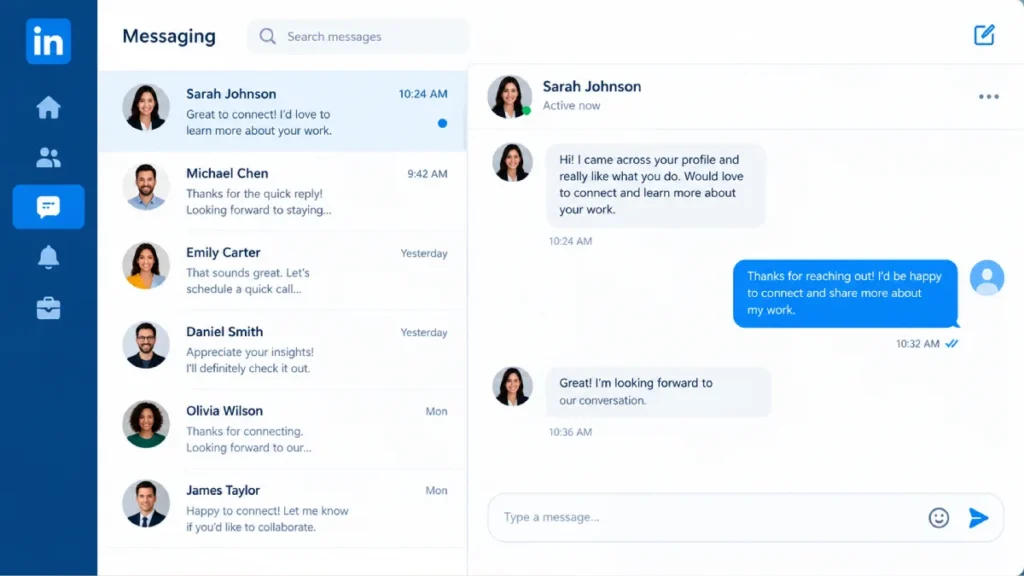
11. Provide Value Before Asking for Something
One of the best ways to improve LinkedIn outreach is to provide value.
You could share:
- A useful article
- A relevant report
- A helpful tool
- A free resource
- An industry insight
- A simple recommendation
For example:
“Hi Mark, I noticed you’re working on B2B growth. I recently found this resource about improving prospect research and thought it might be useful for your team.”
The goal is to make the conversation useful rather than purely promotional.
12. Use Social Proof Carefully
Social proof can help establish credibility.
Depending on your experience, you may mention:
- Previous projects
- Client results
- Relevant experience
- Certifications
- Industry knowledge
- Case studies
For example:
“I recently helped a B2B company organize and clean its prospect database.”
Keep your claims accurate and avoid exaggerating results.
13. Test Different Message Styles
There is no single LinkedIn message that works for every audience.
You can test different approaches.
For example:
Approach A – Question
“Hi James, how is your team currently handling B2B prospect research?”
Approach B – Observation
“Hi James, I noticed your company is expanding into new markets. I thought it would be useful to connect.”
Approach C – Value
“Hi James, I recently came across a useful resource for B2B prospecting and thought it might be relevant to your work.”
Track your results and learn which types of messages generate meaningful conversations with your particular audience.
14. Stay Consistent
LinkedIn outreach usually works better as a consistent process rather than a one-time activity.
Create a realistic weekly routine.
For example:
Monday: Research prospects
Tuesday: Send personalized connection requests
Wednesday: Engage with relevant posts
Thursday: Follow up with previous contacts
Friday: Review your results and update your spreadsheet
Consistency allows you to improve your process over time.
Common LinkedIn Outreach Mistakes to Avoid
Even a good outreach strategy can fail if you make common mistakes.
Sending Generic Messages
Copying and pasting the same message to everyone can make your outreach feel automated.
Writing Very Long Messages
Your first message doesn’t need to explain everything about your business.
Pitching Too Early
Give the prospect an opportunity to understand who you are before presenting an offer.
Ignoring the Prospect’s Profile
Basic research can make your message much more relevant.
Sending Too Many Follow-Ups
Follow up professionally, but respect the other person’s time.
Making Unrealistic Claims
Never promise guaranteed results or use misleading information.
Using Poor Grammar
Professional communication matters. Always review your message before sending it.
LinkedIn Outreach Message Template
Here is a simple template you can adapt:
Connection Message:
“Hi [Name], I came across your profile while researching professionals in [industry]. I noticed your experience in [specific area] and thought it would be great to connect.”
Follow-Up Message:
“Thanks for connecting, [Name]. I noticed that you’re working on [relevant area]. I help [type of business] with [specific service/problem]. If this is something your team is currently working on, I’d be happy to share a few ideas.”
Remember to personalize the message instead of sending the exact same text to every prospect.
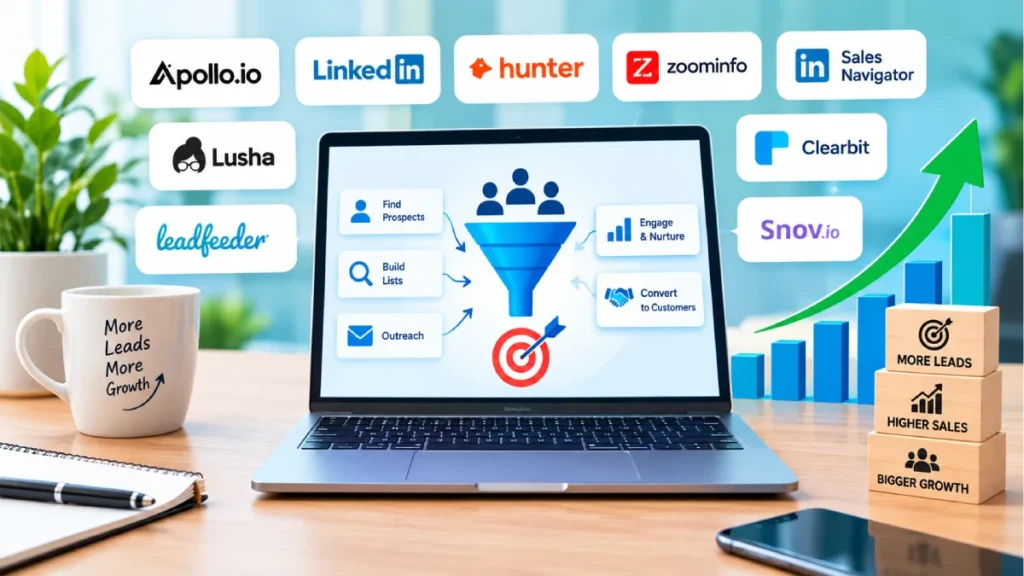
Tools That Can Help With LinkedIn Outreach
Several tools can support different parts of an outreach workflow.
For example, you can use:
- LinkedIn Search for prospect research
- LinkedIn Sales Navigator for advanced prospect discovery
- Google Sheets for tracking
- Excel for data management
- Email verification tools for checking business email data
- CRM software for managing leads
The tools you choose should support your workflow rather than replace thoughtful communication.
Pingback: LinkedIn Sales Navigator Guide: How to Find and Manage Leads