

Keyword research is one of the most important steps in search engine optimization (SEO). It helps website owners understand what people are searching for online and which topics they should cover in their content.
Whether you run a personal blog, a business website, or a digital marketing website, choosing the right keywords can help you create more useful content and reach the right audience.
For example, someone interested in learning SEO might search for “SEO for beginners,” “how to do keyword research,” or “free keyword research tools.” These phrases reveal different interests and learning needs.
However, keyword research is not simply about finding popular search terms. You also need to understand search intent, competition, relevance, and the type of content users expect to find.
In this keyword research guide, you will learn how to find keyword ideas, evaluate them, choose suitable target keywords, and use your research to create an effective SEO content strategy.
What Is Keyword Research?
Keyword research is the process of discovering and analyzing the words and phrases people enter into search engines when looking for information, products, services, or solutions.
These search terms are commonly called keywords or search queries.
For example, if someone wants to learn how to improve a website’s visibility, they might search for:
- SEO tips for beginners
- How to improve website rankings
- Best free SEO tools
- Keyword research tutorial
- On-page SEO checklist
Each query represents a potential content opportunity.
By researching these phrases, website owners can identify relevant topics, understand their audiences, and organize their content around real user needs.
Keyword research is useful for bloggers, SEO professionals, freelancers, affiliate marketers, and businesses that want to improve their online visibility.
Why Is Keyword Research Important for SEO?
Keyword research helps you make informed decisions before creating content. Instead of choosing topics based only on personal assumptions, you can investigate what your intended audience is interested in.
Here are five important benefits.
1. Understand Your Audience
Keyword research helps you discover the questions, problems, and interests of your target readers.
For example, a search for “what is SEO” suggests that the user may be a beginner. A search for “SEO audit checklist for WordPress” suggests a more specific need.
Understanding these differences helps you create content that matches your audience’s experience and expectations.
2. Discover Relevant Content Ideas
A single topic can produce many related keyword ideas.
For example, researching “keyword research” may reveal opportunities for articles about free tools, long-tail keywords, search intent, competitor analysis, and keyword mapping.
These ideas can become separate articles within a well-organized content strategy.
3. Improve Search Visibility
When your content clearly addresses a relevant search query, search engines can better understand the page’s subject.
However, selecting a keyword does not guarantee high rankings. Content quality, usefulness, competition, site accessibility, and many other factors also matter.
4. Avoid Unnecessary Content Competition
If your website is new, competing immediately for broad, highly competitive topics may be challenging.
More specific topics can offer a practical starting point, especially when you can answer a particular question more thoroughly than existing pages.
5. Build a Long-Term Content Strategy
Keyword research helps you plan related articles, organize website categories, and identify opportunities for internal linking.
Over time, this can help you build a useful resource library around your website’s main topics.
Types of Keywords You Should Know
Understanding different keyword types makes it easier to plan your content.
Short-Tail Keywords
Short-tail keywords are broad search phrases that usually contain one or two words.
Examples:
- SEO
- Marketing
- Freelancing
- Keywords
These phrases may cover a wide range of search intentions and can be competitive.
Long-Tail Keywords
Long-tail keywords are more specific search phrases. They often contain several words and communicate a clearer need.
Examples:
- How to do keyword research for a new website
- Free keyword research tools for beginners
- How to find low-competition SEO keywords
Long-tail keywords can help you create focused content. However, their actual search demand and competition should be checked rather than assumed.
Informational Keywords
These keywords indicate that users want to learn something.
Examples:
- What is keyword research?
- How does SEO work?
- How to find keywords for a blog
Tutorials, guides, and educational articles are often suitable for these searches.
Commercial Investigation Keywords
These queries suggest that users are comparing available options before making a decision.
Examples:
- Best keyword research tools
- Ahrefs vs. Semrush
- Free vs. paid SEO tools
Comparison articles and detailed tool reviews may fit these searches.
Transactional Keywords
These keywords indicate that users may be ready to take an action, such as purchasing a service or subscribing to a product.
Examples:
- Buy SEO software
- Subscribe to an SEO tool
- Hire an SEO consultant
The appropriate content depends on what your website offers and what the searcher expects.
Step 1: Define Your Website’s Main Topic
Before using a keyword research tool, identify your website’s niche and target audience.
For example, a digital skills website might cover:
- Search engine optimization
- Artificial intelligence tools
- Freelancing
- B2B lead generation
- Digital marketing
Choose topics that are relevant to your readers and fit your website’s overall purpose.
Next, think about your audience. Are they beginners, students, freelancers, business owners, or experienced professionals?
A beginner-focused website might prioritize “SEO basics for beginners,” while a more advanced site might cover technical SEO audits or content optimization workflows.
Tip: Start with a manageable number of closely related topics. A focused content strategy is generally more useful than publishing unrelated articles simply because they have attractive keyword metrics.
Step 2: Create a List of Seed Keywords
Seed keywords are broad terms that describe your main topics. They provide the starting point for discovering more specific phrases.
Suppose your website focuses on SEO. Your seed keyword list might include:
- Keyword research
- SEO tools
- On-page SEO
- Technical SEO
- SEO content writing
- Website optimization
For a freelancing website, you might use:
- Freelancing for beginners
- Fiverr tips
- Upwork profile optimization
- Freelance writing
- Finding clients online
Write these seed keywords in a spreadsheet. You can then expand each one using keyword tools, search suggestions, and questions people ask online.
Keep your list organized by topic so you can identify related content opportunities more easily.
Step 3: Use Keyword Research Tools
Keyword research tools help you discover search phrases and evaluate metrics such as estimated search volume, competition, and keyword difficulty.
Here are some useful options.
Google Keyword Planner
Google Keyword Planner is designed primarily for advertising research, but it can also help you discover keyword ideas and estimated search demand.
You can enter a seed keyword, explore related suggestions, and investigate how interest varies across locations.
Keep in mind that its search-volume estimates are intended for advertising planning and may not exactly represent organic search traffic.
Google Search Suggestions
Start typing a topic into Google and review the suggestions that appear.
For example, entering “keyword research for” might suggest several more specific searches.
These suggestions can help you discover the language people use. They should be treated as ideas to investigate, not proof of a particular search volume.
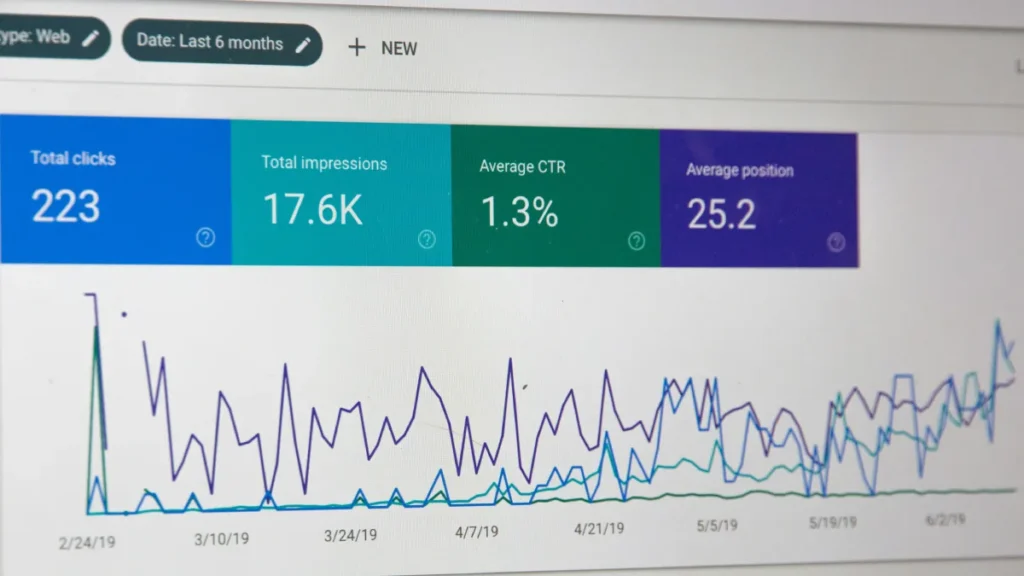
Google Search Console
If your website already receives search traffic, Google Search Console can show the queries that generate impressions and clicks for your pages.
This information can help you identify topics where your content may need improvement or where readers are finding your website through unexpected searches.
Search Console is especially useful for refining an existing SEO strategy.
Other SEO Research Tools
Tools such as Ahrefs, Semrush, and Ubersuggest provide keyword suggestions and various competitive research metrics. Features and free access limits differ between tools.
You do not need to purchase several subscriptions immediately. Begin with the free resources available to you, learn the process, and consider paid tools only when their additional features are useful.

Step 4: Understand Search Intent
Search intent refers to the purpose behind a search query. Understanding it helps you decide what kind of content to create.
There are four common categories.
Informational intent: The user wants to learn something.
Example: “What is keyword research?”
Suitable content: A beginner-friendly educational guide.
Navigational intent: The user wants to find a particular website or page.
Example: Searching for the official website of an SEO tool.
Suitable content: The official website or a clearly relevant destination.
Commercial investigation intent: The user is researching options before making a choice.
Example: “Best SEO tools for small websites.”
Suitable content: A useful comparison or an honest, well-supported review.
Transactional intent: The user wants to complete an action.
Example: “Buy SEO software.”
Suitable content: A relevant product or service page.
Before writing an article, search for your target phrase and review the results. Look at the type of content ranking, the questions being answered, and the depth of information provided.
If the results mainly contain tutorials, a product landing page may not satisfy the searcher’s needs.
Your goal is to provide the kind of information the audience is looking for while adding your own useful explanations, examples, or experience.
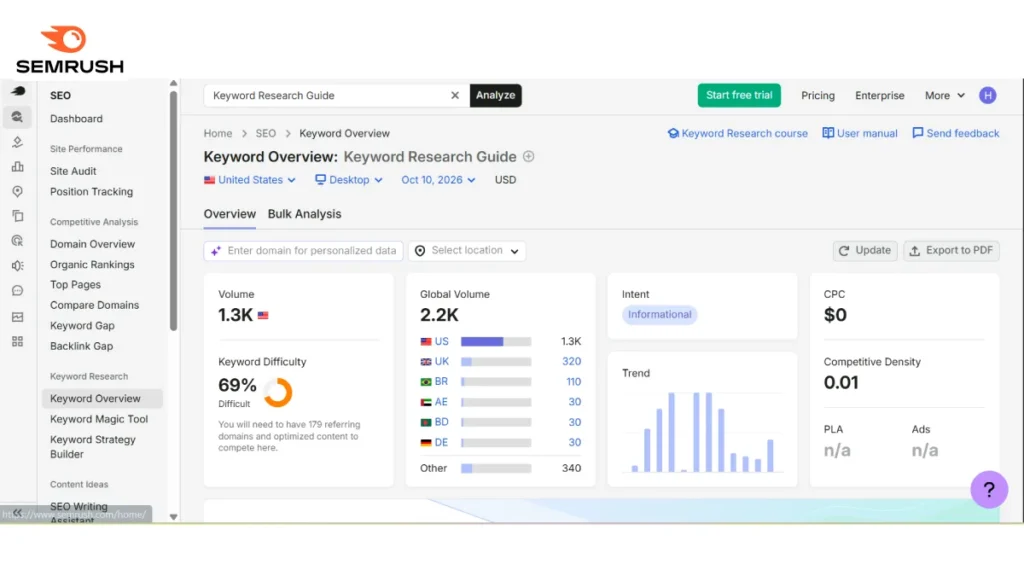
Step 5: Evaluate Keyword Difficulty and Search Volume
After collecting keyword ideas, compare them using available data.
Three useful factors are search volume, keyword difficulty, and relevance.
Search Volume
Search volume estimates how often people search for a phrase within a specified location and time period.
Higher volume can indicate greater interest, but it does not automatically mean a keyword is the best choice for your website.
A broad keyword may attract a wide range of visitors, while a specific keyword may attract a smaller audience with a clearer need.
Keyword Difficulty
Keyword difficulty is a third-party estimate used by some SEO tools to approximate how challenging it may be to rank for a keyword.
Different tools calculate this metric differently. It is not an official Google ranking score.
Review the actual search results alongside the metric. Consider the relevance and quality of competing pages, their coverage of the topic, and the strength of your own website.
Keyword Relevance
Relevance is essential. A keyword may have attractive metrics but still be a poor fit for your audience.
For example, a beginner SEO blog should prioritize useful educational topics rather than unrelated keywords with high estimated search volume.
Step 6: Find Long-Tail and Question-Based Keywords
Long-tail and question-based keywords can help you identify specific problems to address.
Consider the seed keyword “SEO tools.”
Related ideas might include:
- What are SEO tools?
- Best free SEO tools for beginners
- How to use SEO tools for keyword research
- Which SEO tools are useful for a new website?
- How to track organic search performance
You can discover these ideas through search suggestions, relevant discussion forums, keyword tools, and the questions that readers send you.
Do not assume that every question has substantial search demand. Check available data where possible and prioritize questions that are genuinely useful to your audience.
Question-based keywords are particularly helpful when planning tutorials, frequently asked questions, and step-by-step guides.
Step 7: Analyze Competitor Content
Competitor analysis can reveal topics your website has not covered yet.
Begin by searching your target keyword and reviewing several relevant pages.
Look for:
- The questions competitors answer
- Important subtopics they include
- Examples or screenshots they provide
- Areas where their explanations are unclear
- Practical details readers may still need
For example, an existing article about keyword research may explain search volume but fail to show beginners how to organize a keyword list.
You could improve your own guide by adding a clear workflow, a sample spreadsheet, and an explanation of how to choose a target keyword.
The goal is not to copy competing articles. Use your research to understand what users need and create an original resource that provides additional value.
Step 8: Organize Keywords into Topic Clusters
Once you have collected your keywords, group similar phrases according to their subject and search intent.
This process is often called keyword clustering or keyword mapping.
For example, an SEO website could organize its content as follows:
Main topic: Keyword Research
- Keyword Research Guide
- Best Free Keyword Research Tools
- How to Find Long-Tail Keywords
- Understanding Search Intent
- Keyword Research for New Websites
The main guide can introduce the overall process and link naturally to the more detailed articles.
Each supporting article should address a distinct need. If two keyword phrases have very similar intent, you may be able to cover them in one comprehensive article instead of publishing repetitive pages.
Organizing your content this way helps readers discover related information and makes internal linking easier.
Step 9: Choose One Primary Keyword for Each Article
Before writing an article, decide which main search topic it will address.
For example:
Article title: Keyword Research Guide: How to Find the Right Keywords for SEO
Primary keyword: Keyword Research Guide
Related keywords:
- How to do keyword research
- Keyword research for SEO
- SEO keyword research tools
- Long-tail keywords
- Search intent
Use the primary keyword naturally in the title, introduction, and other relevant parts of the page.
Include related phrases when they help explain the subject. Avoid forcing every variation into the article.
Google can understand related language and the meaning of a page, so repeating a keyword excessively is unnecessary and can make the writing less helpful.
Step 10: Create SEO-Friendly Content
After selecting a keyword, create content that directly answers the reader’s question.
Use a clear title, logical headings, short paragraphs, and relevant examples. Include screenshots when they help readers understand a tool or complete a task.
Consider these on-page SEO practices:
- Write a descriptive SEO title.
- Create a clear, readable URL.
- Include the primary topic naturally in the introduction.
- Use descriptive H2 and H3 headings.
- Add relevant internal links to related articles.
- Use descriptive alt text for meaningful images.
- Check the page on mobile devices.
- Make sure the content is original, accurate, and helpful.
Your meta description should briefly summarize the page and explain why it is useful. Google may choose a different search snippet depending on the query.
There is no guaranteed keyword density, ideal article length, or formula that automatically produces a high ranking. Focus on satisfying the reader’s needs rather than writing for a word-count target alone.
Common Keyword Research Mistakes to Avoid
Even a well-planned keyword strategy can be less effective when based on misleading assumptions.
Choosing Keywords Only Because They Have High Search Volume
Popular keywords may be broad, competitive, or unrelated to your audience. Evaluate relevance and intent before selecting them.
Ignoring Search Intent
An article that does not match what users expect may fail to satisfy their needs, even if it mentions the target phrase.
Keyword Stuffing
Repeating a phrase unnaturally can make an article difficult to read. Write naturally and use related terms only when they make sense.
Targeting the Same Intent With Multiple Articles
Publishing several nearly identical pages can create unnecessary overlap. Review your existing content before planning another article.
Trusting Every Tool Metric
Search volume and difficulty scores are estimates, not guarantees. Combine tool data with your own review of search results and audience needs.
Forgetting to Update Your Research
Search behavior, competitors, and available tools can change. Review important pages periodically and update information when it becomes outdated.
Conclusion
Keyword research is the foundation of a thoughtful SEO content strategy. It helps you discover relevant topics, understand search intent, evaluate keyword opportunities, and plan articles that serve your audience.
To get started, define your website’s niche, create a list of seed keywords, explore keyword research tools, and organize your findings into a practical spreadsheet.
Then choose a primary topic for each article, study the existing search results, and create original content that answers readers’ questions clearly.
Remember that keyword research is not a one-time task. Monitor your website’s performance, learn from the queries that bring visitors to your pages, and improve your content over time.
By combining useful research with consistent, reader-focused publishing, you can build a stronger foundation for long-term organic search visibility.
Frequently Asked Questions (FAQs)
1. What is keyword research in SEO?
Keyword research is the process of discovering and analyzing search phrases to understand audience needs and plan relevant website content.
2. Which keyword research tools are useful for beginners?
Google Keyword Planner, Google Search suggestions, and Google Search Console are useful starting points. Some third-party SEO tools also offer keyword research features.
3. Are long-tail keywords good for new websites?
They can be useful because they often describe a more specific need. However, you should evaluate relevance, competition, and available demand rather than assuming every long-tail keyword is easy to rank for.
4. How many keywords should I target in one article?
Focus on one primary topic and naturally cover closely related terms that help answer the reader’s question. There is no fixed number that works for every article.
5. Does keyword research guarantee higher Google rankings?
No. Keyword research helps you make better content decisions, but rankings depend on many factors. There is no guaranteed method for reaching the top of Google search results.
6. How often should I update keyword research?
Review your strategy periodically and whenever your audience, topic, or search performance changes significantly. Use your own website data to identify opportunities for improvement.


Pingback: Local SEO Secrets for Dominating Google Maps Search - VistiqLab
Pingback: SEO Basics for Beginners: A Complete Guide