Local SEO has become one of the most important digital marketing strategies for businesses that want to attract nearby customers. When people search for services such as “best coffee shop near me,” “plumber in my area,” or “digital marketing agency near me,” Google often displays a map with several local businesses before showing traditional organic search results. This section is commonly known as the Google Maps results or the local map pack.
For small businesses, appearing in these results can create valuable opportunities to increase visibility, generate phone calls, attract website visitors, and bring more customers through the door. However, ranking prominently on Google Maps requires more than simply creating a business listing. Businesses need accurate information, a well-optimized Google Business Profile, positive customer reviews, relevant website content, and a consistent local SEO strategy.
The good news is that local SEO is not limited to large companies with substantial marketing budgets. Local shops, restaurants, service providers, freelancers, and small agencies can all improve their local search presence by following proven optimization practices.
In this guide, you will discover practical local SEO secrets for improving Google Maps visibility, strengthening your business profile, earning customer trust, and building a sustainable strategy for local search success.
What Is Local SEO and Why Does Google Maps Matter?
Local SEO is the process of optimizing your online presence to help your business appear in search results related to a particular geographic area. It helps search engines understand what your business offers, where it operates, and which customers are most likely to find it relevant.
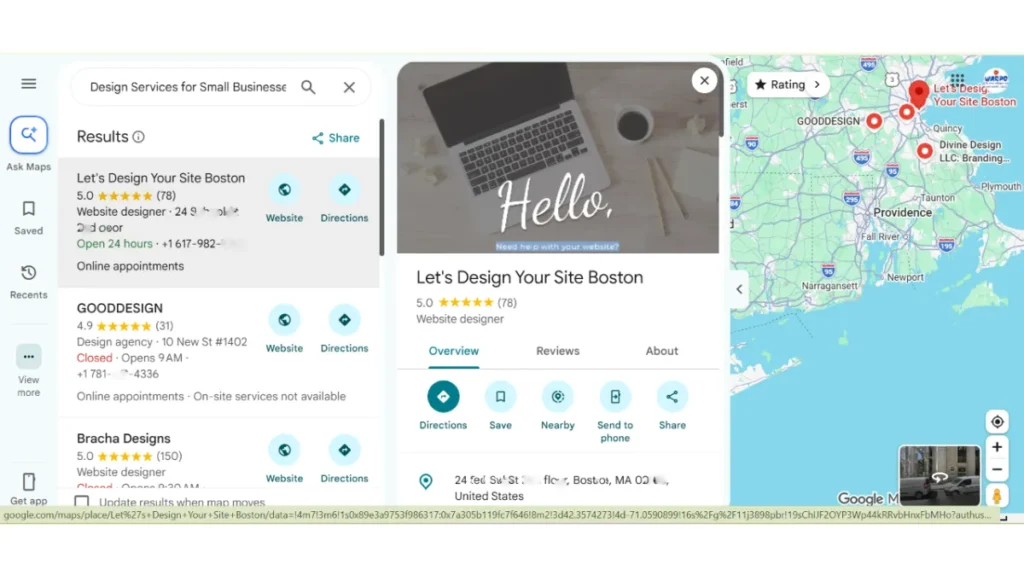
For example, if someone searches for “electrician in Chattogram,” Google may display nearby electricians on a map alongside their ratings, addresses, opening hours, and contact information.
Google Maps matters because customers frequently use local search results when they are ready to take action. They may want directions to a store, need to call a service provider, or want to compare businesses before making a purchase.
An effective local SEO strategy can help businesses achieve several goals:
- Increase visibility in geographically relevant searches.
- Generate more qualified phone calls and website visits.
- Help potential customers discover products and services.
- Build credibility through genuine customer reviews.
- Improve the overall customer experience.
- Strengthen brand recognition within the local community.
However, appearing on Google Maps is not guaranteed, even when a business has an optimized profile. Google determines local rankings using several signals, and competitors can influence how visible a business becomes.
1. Optimize Your Google Business Profile
One of the most important steps in local SEO is creating and optimizing your Google Business Profile. This free tool allows eligible businesses to manage how their information appears across Google Search and Google Maps.
Start by claiming your existing profile or creating a new one through Google’s official Business Profile service. Complete the verification process using the methods Google makes available for your business.
Once your profile is verified, review every important field.
Your business name should reflect your real-world business name. Avoid adding unnecessary keywords, locations, or promotional phrases that are not part of your actual name. Such additions may violate Google’s guidelines.
Choose the most accurate primary business category. For example, a business that mainly provides plumbing services should select the appropriate plumbing category rather than a broad category that does not accurately represent its main activity.
Add relevant secondary categories when they genuinely describe other services your business provides.
You should also provide an accurate address or service area, business phone number, website URL, opening hours, and a clear description of your services. Businesses that serve customers at their locations and businesses that travel to customers may have different profile requirements.
Complete profiles make it easier for potential customers to understand your business and decide whether it meets their needs.
2. Choose the Right Local Keywords
Keyword research helps you understand what potential customers search for when looking for your products or services. For local SEO, the goal is to identify relevant search terms that communicate both customer intent and geographic relevance.
Start with your primary service and combine it with the locations you genuinely serve.
For example:
- Plumber in Chattogram
- Best bakery in Dhaka
- Digital marketing agency in Sylhet
- Emergency electrician near me
- Affordable website design in Bangladesh
These examples represent different types of searches. Some include a specific city, while others communicate urgency or price sensitivity.
Use Google Search suggestions, related searches, competitor websites, and keyword research tools to discover additional ideas. Google Keyword Planner and Google Trends can help you explore search demand and changing interest, although available data and geographic precision vary.
Organize keywords according to search intent. Someone searching for “how to repair a leaking tap” may want instructions, while someone searching for “emergency plumber near me” may be ready to hire a professional.
Create useful pages that match these different needs rather than forcing every keyword onto one page.
For example, a plumbing company could create separate pages for emergency plumbing, bathroom installation, and water heater repair if each service is genuinely offered.
Use local keywords naturally in page titles, headings, service descriptions, and relevant website content. Avoid repeating the same city name excessively or inserting keywords into your business name when they do not belong there.
The objective is to answer the searcher’s needs clearly, not to manipulate rankings through keyword repetition.
3. Keep Your Business Information Consistent
Consistency is an important part of building a reliable local online presence. Your business name, address, phone number, and website should be accurate wherever customers encounter them.
These details are often referred to as NAP information, which stands for Name, Address, and Phone Number.
Review your Google Business Profile, website contact page, social media accounts, and important business directories. Correct outdated phone numbers, old addresses, inconsistent business names, and broken website links.
For example, if your business has moved to a new location, update your profile and other important listings as soon as possible.
Not every difference in formatting is necessarily harmful. However, contradictory details can confuse customers and make it harder for them to contact the correct business.
Focus on accuracy rather than submitting your business to hundreds of low-quality directories. A smaller number of trustworthy, relevant listings is generally more useful than a large collection of unreliable citations.
Keep a simple record of the directories where your business appears so that future updates remain manageable.
4. Earn More Genuine Customer Reviews
Customer reviews can influence both purchasing decisions and local search performance. They help potential customers understand what it is like to work with your business before making contact.
Encourage satisfied customers to leave honest feedback by sharing your Google review link after a completed purchase or service. You can send the link through a follow-up email, a customer message, or a printed receipt.
Make the request polite and optional. Do not pressure customers, offer rewards for positive reviews, or ask only customers who are likely to leave favorable feedback. These practices can conflict with Google’s review policies.
When customers leave reviews, respond professionally and promptly.
Thank customers for positive feedback and acknowledge specific aspects of their experience when appropriate. If someone reports a problem, respond calmly, avoid revealing private information, and offer a suitable way to resolve the issue.
For example, if a customer complains about a delayed appointment, acknowledge the inconvenience and invite them to contact your business through an appropriate private channel.
A healthy review strategy focuses on authentic experiences rather than collecting the highest possible number of ratings. Never purchase fake reviews or use automated services that create misleading feedback.
Over time, genuine reviews can help establish trust and provide useful insights into what customers appreciate and what needs improvement.
5. Add High-Quality Photos and Videos
Visual content helps potential customers understand your business before visiting or contacting you. A profile with relevant, authentic photos can communicate professionalism and provide a clearer picture of your products, premises, team, and services.
Depending on your business type, consider uploading:
- Exterior photos that help customers recognize your location.
- Interior photos showing the actual customer environment.
- Product images that accurately represent what you sell.
- Team photos that introduce the people behind your business.
- Examples of completed projects or services.
- Short videos that demonstrate your work or facilities.
Use clear, well-lit images that accurately represent your business. Avoid stock photos that mislead customers about your premises or services.
For a restaurant, useful photos might include the entrance, dining area, and actual menu items. For a home repair company, photos of completed projects may be more relevant.
Before uploading images, check that you have permission to use them and that they do not expose customers’ private information.
Add new photos when your business changes, launches new services, or completes relevant projects. There is no need to upload images every day simply to appear active.
The goal is to provide helpful visual evidence that supports customers’ decisions.
6. Optimize Your Website for Local Search
Your Google Business Profile and website should support each other. A complete business profile is useful, but a well-structured website provides additional information about your services, experience, service areas, and business expertise.
Start by ensuring that your website works well on mobile devices. Many local searches happen on smartphones, where visitors expect pages to load quickly and contact details to be easy to find.
Include your business name, address where applicable, phone number, opening hours, and service information on relevant pages. Make the phone number clickable on mobile devices and provide a clear way for visitors to request a quote or book a service.
Create dedicated service pages when your business offers multiple important services. Each page should explain what the service includes, who it is for, and how customers can get help.
If you serve multiple locations, create location pages only when they provide meaningful, location-specific information. Avoid producing dozens of nearly identical pages that simply replace one city name with another.
Include relevant local details, such as the neighborhoods you serve, common customer questions, project examples, or location-specific service information.
Use descriptive page titles, logical headings, helpful internal links, and original content. Optimize images for appropriate file sizes and provide descriptive alternative text where useful.
These improvements can help search engines understand your website and make it easier for potential customers to find the information they need.
7. Use Local Content to Build Authority
Publishing useful content is another way to strengthen your local search presence. Instead of writing only promotional articles, answer questions that customers in your service area genuinely ask.
A roofing company might publish a guide to preparing a roof for heavy rain. A restaurant could create an article about local food traditions or explain how to choose dishes for a group event.
A digital marketing agency might publish a practical guide to helping small businesses improve their online visibility in a particular city.
Local content can also include project case studies, community event coverage, service updates, and answers to frequently asked questions.
Make each article useful on its own. Include practical advice, accurate information, original examples, and relevant links to your services when appropriate.
Avoid publishing large quantities of repetitive, low-value articles simply to target different city names. Search engines aim to provide relevant, helpful results, so meaningful content is a more sustainable approach.
When your content addresses real customer needs, it can attract relevant visitors, support your website’s credibility, and create opportunities for people to discover your business.
8. Build Relevant Local Citations and Backlinks
Local citations are online mentions of your business information. They may appear in business directories, professional associations, local websites, or industry-specific platforms.
Start with reputable directories that are relevant to your business and geographic market. Depending on your location and industry, these could include established local directories, chamber of commerce listings, trade associations, and professional membership websites.
Make sure the information you submit is accurate and consistent with your official business details.
Backlinks are links from other websites to your website. Relevant backlinks can help search engines discover your content and understand its relationship to other websites.
To earn them, consider contributing expert advice to local publications, participating in legitimate community initiatives, sponsoring relevant events, or publishing original research that other websites may want to reference.
For example, a local home improvement company might contribute maintenance advice to a neighborhood publication. A business serving other companies might publish an industry report that local organizations find useful.
Avoid buying large quantities of links, participating in link schemes, or creating fake directory listings. These tactics can waste money and create search-quality risks.
Focus on building genuine relationships and earning links that make sense for your business.
9. Understand Google’s Local Ranking Factors
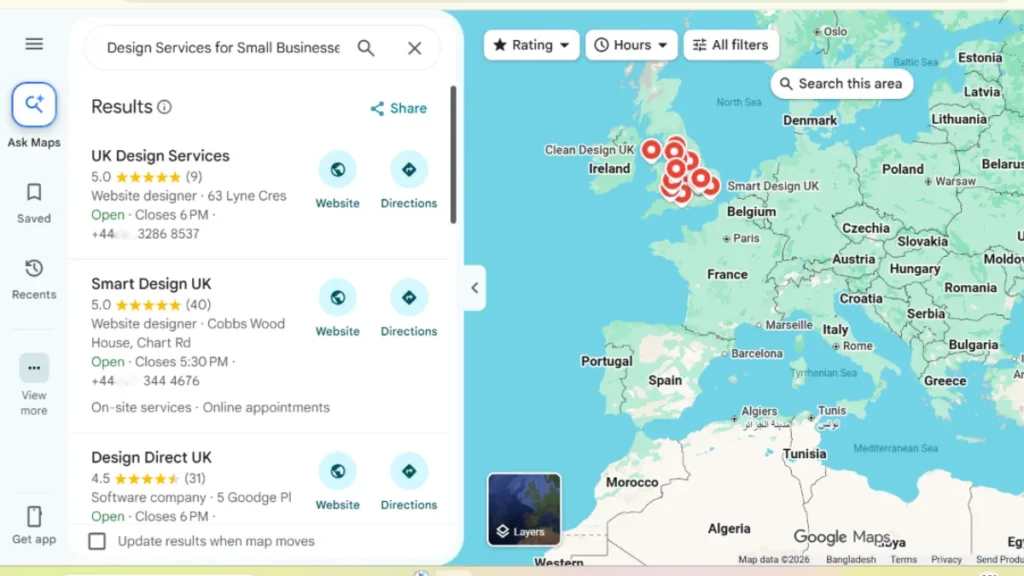
Google explains local rankings through three main factors: relevance, distance, and prominence.
Relevance describes how well a business profile matches what someone is searching for. Accurate categories, complete business information, and relevant services can help Google understand that connection.
Distance refers to how far a business is from the searcher or the location specified in a search. Businesses cannot fully control this factor, and a competitor that is closer to a searcher may appear ahead of them.
Prominence relates to how well-known a business is. Information such as reviews, links, and other evidence of the business’s reputation may contribute to how Google understands its prominence.
These factors explain why there is no universal trick that guarantees the first position on Google Maps.
A business may rank well for one neighborhood and less prominently in another. Its visibility may also differ depending on the search term and competing businesses.
Instead of chasing a guaranteed ranking, concentrate on making your business information accurate, improving customer satisfaction, creating useful website content, and earning legitimate recognition.
These actions support a more sustainable local search strategy.
10. Track Your Google Maps Performance
Local SEO works best when you measure results and use the information to improve your strategy.
Google Business Profile performance data can provide insights into how people discover and interact with your profile. Depending on available reporting, you may be able to review search terms, calls, website clicks, direction requests, and other interactions.
Google Search Console can help you understand your website’s search visibility, impressions, clicks, and queries. Website analytics can provide additional information about visitor behavior and conversions.
Review these metrics regularly, but do not assume that every increase or decrease comes from one particular SEO change.
For example, more website clicks may indicate growing interest, but you should also determine whether those visitors submit inquiries or become customers.
Track a small set of meaningful indicators:
- Relevant local search visibility.
- Google Business Profile interactions.
- Calls and direction requests.
- Website visits from local searches.
- Quote requests, bookings, or completed sales.
- Review quality and customer feedback.
Keep records of important changes, such as updating business categories or launching new service pages. This makes it easier to evaluate performance over time.
11. Avoid Common Local SEO Mistakes
Even a well-planned strategy can become less effective when businesses rely on shortcuts or neglect basic maintenance.
One common mistake is keyword stuffing. Repeating city names or service terms unnaturally does not create a better customer experience and may violate profile guidelines when used to manipulate the business name.
Another mistake is choosing an inaccurate primary category. Select the category that best represents your core business rather than selecting unrelated categories in an attempt to appear in more searches.
Never create multiple profiles for the same business at the same location unless Google’s eligibility rules permit the specific arrangement. Duplicate listings can confuse customers and create profile management problems.
Do not use fake addresses, virtual locations that do not meet Google’s requirements, purchased reviews, or misleading business descriptions.
Businesses that travel to customers should configure their service areas according to their actual operations and applicable profile rules.
Finally, do not ignore customer questions, outdated opening hours, broken links, or incorrect contact information. These issues can reduce customer confidence even when your business appears in search results.
A successful strategy combines policy compliance, accurate information, excellent service, and continuous improvement.
12. Create a Practical Local SEO Action Plan
If you are new to local SEO, you do not need to implement every strategy at once. Start with the improvements that have the greatest practical value.
During the first week, claim or review your Google Business Profile, verify important information, choose the appropriate categories, and check that your website link works.
During the second week, research relevant local keywords, review your website’s service pages, and correct inconsistent business information.
During the third week, upload authentic business photos, establish a polite process for requesting genuine customer reviews, and respond to existing feedback.
During the fourth week, review your performance data, identify the most important website improvements, and explore relevant local directories or partnership opportunities.
Continue monitoring your progress after the first month. Local SEO is an ongoing process rather than a one-time setup task.
Your priorities should depend on your industry, location, competition, budget, and business goals. A newly established service business may need to focus on profile completeness and customer trust, while an established company may benefit from improving website content and measuring conversions.
Conclusion
Dominating Google Maps search requires a combination of accurate business information, relevant local keywords, an optimized Google Business Profile, authentic customer reviews, helpful website content, and consistent performance monitoring.
The most important lesson is that local SEO is not about finding a secret shortcut to the number-one position. It is about helping search engines understand your business while giving potential customers reliable information and a positive experience.
Start by improving your Google Business Profile, ensuring that your contact information is accurate, and making your website useful for local customers. Then build on that foundation with genuine reviews, relevant photos, valuable content, and trustworthy local connections.
Results will vary depending on competition, location, relevance, and other factors. However, a consistent, customer-focused approach can help your business build a stronger local presence over time.
Whether you operate a restaurant, retail store, professional service, or digital agency, these local SEO strategies provide a practical foundation for improving discoverability and attracting customers through Google Maps.
Frequently Asked Questions
How long does local SEO take to show results?
There is no fixed timeline. Some improvements may affect how customers interact with a profile relatively quickly, while meaningful ranking changes can take weeks or months. Competition, location, profile quality, and website authority all influence progress.
Is Google Business Profile free?
Yes. Google Business Profile is a free tool for eligible businesses to manage their presence on Google Search and Google Maps. Businesses should use Google’s official service to create, claim, and manage their profiles.
Do Google reviews improve Google Maps rankings?
Reviews can contribute to local prominence and influence customer decisions. However, rankings depend on multiple factors, including relevance and distance. More reviews do not guarantee a higher position.
Can a business rank on Google Maps without a website?
An eligible business can have a Google Business Profile without a website. However, a useful website can provide additional information, answer customer questions, and create more opportunities to generate inquiries.
What is the most important local SEO factor?
There is no single factor that guarantees success. Start with an accurate and complete Google Business Profile, appropriate business categories, reliable contact information, and a website that clearly explains your services. Continue improving your customer experience and measuring results.